
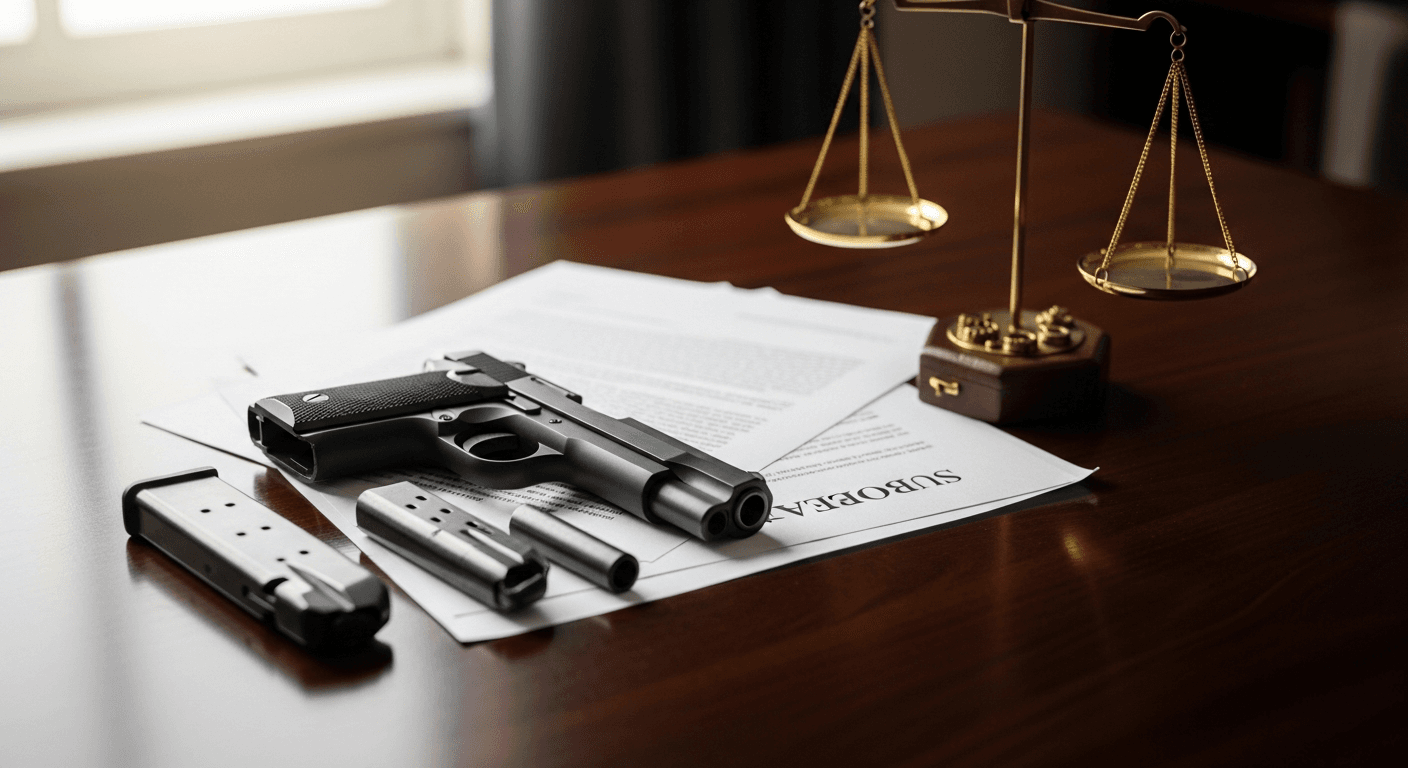
Weapons Charges Attorneys
Experienced legal representation for weapons charges matters across all 50 states.
About Weapons Charges
Weapons charges encompass a broad category of criminal offenses involving the illegal possession, use, sale, or manufacture of firearms and other dangerous weapons. Federal and state laws impose a complex web of regulations governing who may legally possess firearms, where weapons may be carried, what types of weapons and accessories are permitted, and how firearms may be transferred between individuals. Violations of these laws carry severe penalties that often include mandatory minimum prison sentences, particularly when a weapon is used in connection with another crime such as drug trafficking or robbery.
The Second Amendment to the United States Constitution protects the individual right to keep and bear arms, but this right is not unlimited. Both federal law, primarily through the Gun Control Act of 1968 and the National Firearms Act, and state laws impose significant restrictions. Prohibited persons, including convicted felons, individuals subject to domestic violence protective orders, those convicted of misdemeanor domestic violence offenses, and persons who have been adjudicated as mentally defective, face federal felony charges for mere possession of a firearm. States add their own layers of regulation regarding concealed carry permits, open carry, magazine capacity limits, and assault weapon classifications.
Defending against weapons charges requires an attorney who understands both the constitutional dimensions of firearms law and the technical aspects of weapons classifications, registration requirements, and sentencing enhancements. Many weapons cases involve Fourth Amendment search and seizure issues, as firearms are frequently discovered during traffic stops, home searches, or Terry stops based on reasonable suspicion. A successful motion to suppress illegally seized evidence can result in dismissal of weapons charges entirely. Additionally, defenses based on lack of knowledge, temporary or constructive possession arguments, and Second Amendment challenges continue to evolve as courts interpret the landmark decisions in District of Columbia v. Heller and New York State Rifle & Pistol Association v. Bruen.
Why You Need a Weapons Charges Attorney
Weapons charges carry some of the most severe penalties in the criminal justice system, particularly at the federal level where mandatory minimum sentences remove judicial discretion. A convicted felon found in possession of a single firearm faces up to 15 years in federal prison under the Armed Career Criminal Act if they have three or more prior convictions for violent felonies or serious drug offenses. Even first-time offenders charged with using or carrying a firearm during a drug trafficking crime or crime of violence face a mandatory minimum of five years consecutive to any other sentence under 18 U.S.C. Section 924(c), with subsequent convictions carrying 25-year mandatory minimums.
Beyond incarceration, a weapons conviction creates lasting collateral consequences. Federal firearms disabilities permanently prohibit convicted individuals from possessing any firearm or ammunition. Professional licenses in fields such as law enforcement, security, and the military become unattainable. Immigration consequences can be devastating for non-citizens, as many weapons offenses are classified as aggravated felonies triggering mandatory deportation. The intersection of weapons charges with other criminal conduct frequently results in sentence stacking that can effectively produce life sentences for relatively young defendants.
Common Weapons Charges Cases
Felon in Possession of a Firearm
Federal law under 18 U.S.C. Section 922(g) prohibits any person convicted of a felony from possessing firearms or ammunition. This is one of the most commonly prosecuted federal firearms offenses, carrying penalties of up to 15 years imprisonment. Defenses may include challenging the underlying felony conviction or the constructive possession theory.
Carrying a Concealed Weapon Without a Permit
Many states require a permit or license to carry a concealed firearm. Violations range from misdemeanors to felonies depending on the jurisdiction and circumstances. Recent constitutional carry legislation has changed the legal landscape in numerous states, making jurisdiction-specific knowledge critical.
Illegal Possession of an Assault Weapon
Several states and some municipalities ban or restrict the possession of firearms classified as assault weapons based on specific features such as detachable magazines, pistol grips, or folding stocks. What constitutes an assault weapon varies significantly by jurisdiction.
Unlawful Discharge of a Firearm
Firing a weapon in a prohibited area, recklessly discharging a firearm, or firing a weapon during the commission of another crime can result in serious felony charges. Sentencing enhancements apply when the discharge results in injury or occurs in populated areas.
Possession of an Unregistered NFA Firearm
The National Firearms Act requires registration and a tax stamp for certain weapons including short-barreled rifles, short-barreled shotguns, machine guns, silencers, and destructive devices. Possession of an unregistered NFA item is a federal felony carrying up to 10 years imprisonment.
Straw Purchases and Illegal Firearms Transfers
Purchasing a firearm on behalf of another person who is prohibited from buying one, or knowingly selling a firearm to a prohibited person, is a federal crime. These cases often arise from ATF investigations and carry penalties of up to 10 to 15 years in federal prison.
Weapons Possession During Drug Offenses
Possessing a firearm in connection with drug trafficking carries severe mandatory minimum sentences under 18 U.S.C. Section 924(c). The mandatory minimums increase dramatically if the weapon was brandished or discharged, and second offenses carry a 25-year mandatory minimum.
Typical Weapons Charges Case Timeline
Investigation and Arrest
Days to monthsWeapons charges may arise from a traffic stop, search warrant execution, undercover investigation, or ATF sting operation. Federal cases often involve lengthy investigations before an indictment is returned by a grand jury.
Initial Appearance and Detention Hearing
24-72 hours after arrestThe defendant appears before a judge or magistrate for formal advisement of charges. In federal cases, the government frequently seeks pretrial detention, arguing that the defendant poses a danger to the community based on the weapons allegations.
Discovery and Motion Practice
2-6 monthsThe defense reviews all evidence including police reports, search warrant applications, body camera footage, and forensic evidence. Motions to suppress evidence seized in violation of the Fourth Amendment are filed and litigated during this phase.
Plea Negotiations
Ongoing throughout the caseThe defense and prosecution negotiate potential plea agreements. In federal cases, cooperation agreements may be available where the defendant provides substantial assistance in other investigations in exchange for a reduced sentence.
Trial
3-10 daysIf no agreement is reached, the case proceeds to a jury trial. The prosecution must prove every element beyond a reasonable doubt, including that the defendant knowingly possessed the weapon and that the weapon meets the statutory definition at issue.
Sentencing
60-90 days after convictionThe court imposes sentence after reviewing a presentence investigation report. Federal sentencing involves application of the U.S. Sentencing Guidelines and consideration of statutory mandatory minimums, with the judge having final discretion within the applicable range.
Know Your Rights
- You have the right to refuse consent to a search of your person, vehicle, or home. Politely but clearly state that you do not consent to any search.
- If you are stopped by police, you are generally not required to disclose whether you are carrying a firearm unless your state law specifically requires it or you have a concealed carry permit in a state that mandates disclosure.
- You have the right to remain silent and should not make any statements about weapon ownership or possession without first consulting an attorney.
- If police execute a search warrant at your home, you have the right to see the warrant and note the scope of what it authorizes. You should not physically resist but should verbally assert your objections.
- Under the Second Amendment, as interpreted by the Supreme Court in Heller and Bruen, law-abiding citizens have an individual right to possess firearms for lawful purposes including self-defense in the home and in public.
- If arrested on weapons charges, you have the right to a prompt judicial determination of probable cause and the right to counsel at every critical stage of the proceedings.
- You have the right to challenge the legality of the search or seizure that led to discovery of the weapon through a motion to suppress evidence.
What to Look for in a Weapons Charges Attorney
When facing weapons charges, seek an attorney with specific experience defending firearms cases in the relevant jurisdiction, whether state or federal court. Federal weapons cases in particular require familiarity with the United States Sentencing Guidelines, mandatory minimum sentencing provisions, and the procedural complexities of federal practice. Your attorney should have experience litigating Fourth Amendment suppression motions, as the legality of the search that uncovered the weapon is frequently the most critical issue in a weapons case. Ask about their familiarity with current Second Amendment jurisprudence following the Bruen decision, which has reshaped how courts evaluate firearms regulations. A strong weapons defense attorney will also understand the technical aspects of firearms classifications, ATF regulations, and the nuances of constructive versus actual possession. Look for an attorney who has relationships with firearms experts and forensic specialists who can testify regarding weapon functionality, distance determinations, and ballistics evidence when needed.
Questions to Ask Your Weapons Charges Attorney
- 1Was the search that discovered the weapon legal, and are there grounds to file a motion to suppress the evidence?
- 2Am I being charged under state or federal law, and what are the specific mandatory minimum sentences I face?
- 3Is there a viable Second Amendment challenge to the statute under which I am charged following the Bruen decision?
- 4Are there any diversion programs, pretrial intervention options, or alternative resolutions available for my type of charge?
- 5If cooperation with law enforcement is an option, what would that process look like and what are the potential benefits and risks?
- 6What is the likelihood that additional charges could be filed, and are there any pending investigations that might affect my case?
- 7Do you have experience handling firearms cases in this specific court, and are you familiar with how the assigned judge typically handles weapons cases?
Understanding Weapons Charges Legal Costs
Weapons defense cases can be costly due to the severity of potential penalties and the technical complexity involved. For misdemeanor state weapons charges such as carrying without a permit, flat fees typically range from $2,500 to $10,000. Felony weapons possession charges in state court generally cost between $5,000 and $25,000 depending on the complexity and whether the case goes to trial. Federal weapons charges, which carry the most severe penalties and involve the most complex procedures, typically require retainers of $15,000 to $50,000 or more. Cases involving multiple charges, co-defendants, or extensive forensic evidence cost more. Additional expenses may include firearms experts, private investigators, forensic consultants, and motions specialists. Given the mandatory minimum sentences associated with many weapons offenses, the financial investment in a vigorous defense should be weighed against the years of imprisonment at stake.
Key Legal Terms
Video Resources
These videos are provided for informational purposes only. The attorneys and organizations featured are not affiliated with or endorsed by Northwind Law.
Gun Laws and Your Rights - What You Need to Know
LegalEagle
Can Police Search Your Car? Know Your Rights
Aimee the Attorney
The Second Amendment Explained
Law Venture
Frequently Asked Questions About Weapons Charges
Citations & Sources
- [1]In fiscal year 2023, firearms offenses accounted for approximately 10,500 cases sentenced in federal courts, making it one of the largest offense categories in the federal system. — United States Sentencing Commission, Quick Facts on Firearms Offenses, 2023
- [2]The Bureau of Alcohol, Tobacco, Firearms and Explosives traced over 454,000 firearms in connection with criminal investigations in 2022, a figure that has increased steadily over the past decade. — ATF National Firearms Commerce and Trafficking Assessment, 2022
- [3]Under the Armed Career Criminal Act, a felon in possession conviction carries a mandatory minimum of 15 years when the defendant has three or more qualifying prior convictions. — 18 U.S.C. Section 924(e), Cornell Law Institute
- [4]In New York State Rifle & Pistol Association v. Bruen (2022), the Supreme Court held that the Second Amendment protects an individuals right to carry a handgun for self-defense outside the home. — Supreme Court of the United States, NYSRPA v. Bruen, 597 U.S. ___ (2022)
- [5]The FBI National Instant Criminal Background Check System processed over 31 million background checks in 2022, denying approximately 112,000 transactions based on disqualifying criteria. — FBI NICS Operations Report, 2022
Ready to Discuss Your Weapons Charges Case?
Speak with a experienced weapons charges attorney. Free consultations available.