
Slip and Fall Attorneys
Experienced legal representation for slip and fall matters across all 50 states.
About Slip and Fall
Slip and fall cases, a subset of premises liability law, involve injuries sustained when a person slips, trips, or falls on someone else's property due to a hazardous condition that the property owner or occupier knew about or should have known about. These cases are among the most common personal injury claims, encompassing a wide range of scenarios from wet supermarket floors and icy parking lots to broken stairways and poorly lit hallways. While slip and fall injuries are sometimes dismissed as minor, the reality is that falls are the leading cause of traumatic brain injuries and the most common cause of emergency department visits for nonfatal injuries in the United States.
The legal foundation of a slip and fall claim rests on the concept of premises liability — the duty of property owners and occupiers to maintain reasonably safe conditions for those who enter their property. To succeed in a slip and fall case, you must prove that a dangerous condition existed on the property, that the property owner or occupier knew or should have known about the condition, that they failed to fix the hazard or adequately warn visitors, and that the dangerous condition directly caused your fall and resulting injuries. The standard of care owed varies depending on the visitor's legal status — invitees such as store customers are owed the highest duty of care, while the duty owed to licensees and trespassers is typically lower.
According to the National Safety Council, falls are the third leading cause of unintentional death in the United States and account for over 8 million emergency department visits annually. The Centers for Disease Control reports that one in four Americans aged 65 or older falls each year, and falls are the leading cause of injury-related death for adults over 65. An experienced slip and fall attorney understands how to investigate these cases, preserve evidence, and overcome the challenges that property owners and their insurance companies raise to avoid paying fair compensation.
Why You Need a Slip and Fall Attorney
Falls are the leading cause of non-fatal injuries in the United States, affecting people of all ages in locations ranging from grocery stores and restaurants to office buildings, hotels, and private residences. For older adults, a fall can be life-threatening — hip fractures, traumatic brain injuries, and other fall-related injuries often lead to significant declines in health, independence, and quality of life.
Property owners and their insurance companies frequently attempt to blame the injured person for their fall, arguing that the hazard was open and obvious or that the victim was not paying attention. These defenses can be effective if the injured party lacks experienced legal representation. Slip and fall attorneys know how to counter these arguments by demonstrating that the property owner had notice of the hazard, failed to take reasonable steps to address it, and that the conditions created an unreasonable risk that a careful visitor would not necessarily have avoided. Successful premises liability claims also promote public safety by encouraging property owners to maintain their premises properly.
Common Slip and Fall Cases
Wet Floor Accidents
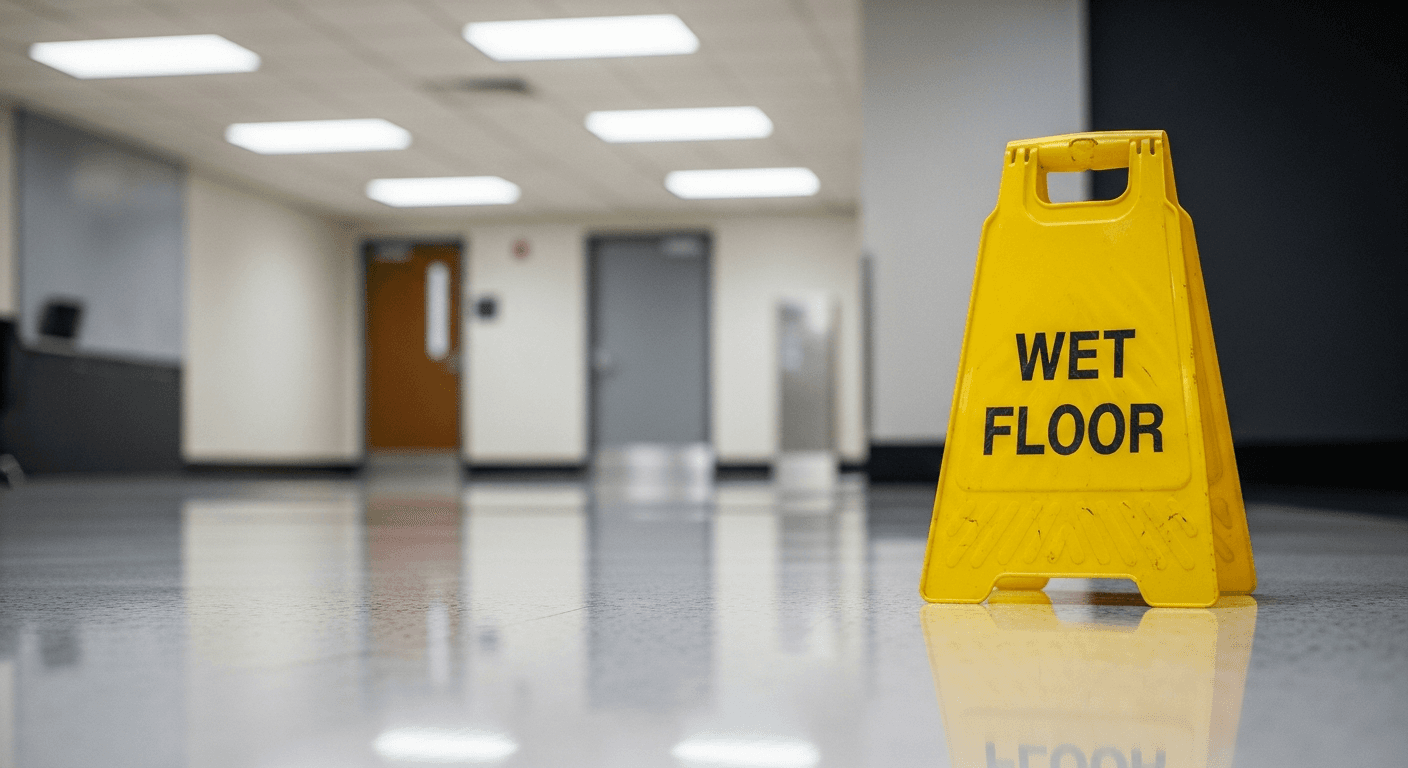
Falls caused by spilled liquids, freshly mopped floors, leaking refrigeration units, or tracked-in rainwater in stores, restaurants, and public buildings. Failure to clean or post warning signs can establish liability.
Ice and Snow Accidents
Falls on icy sidewalks, parking lots, and building entrances. Property owners in cold-weather states have a duty to remove ice and snow or apply salt within a reasonable time after accumulation.
Stairway Falls
Injuries caused by broken steps, missing handrails, inadequate lighting, uneven stair heights, or worn carpet on stairways. Building code violations can serve as strong evidence of negligence.
Uneven Surface Falls
Trips and falls caused by cracked sidewalks, broken pavement, raised or sunken floor tiles, potholes in parking lots, and transition points between different flooring surfaces.
Inadequate Lighting Falls
Falls occurring in poorly lit hallways, parking garages, stairwells, and outdoor walkways where the lack of visibility prevents visitors from seeing hazards.
Grocery Store and Retail Falls
Injuries in stores caused by spills in aisles, produce on the floor, damaged floor mats, merchandise left in walkways, and wet entrance areas. Retailers owe a high duty of care to customers.
Nursing Home and Assisted Living Falls
Falls by elderly residents in care facilities due to inadequate supervision, improperly maintained facilities, wet floors, or failure to assist residents with mobility limitations.
Workplace Falls
Falls at the workplace due to hazardous conditions, which may give rise to both workers' compensation claims and third-party liability claims against property owners or contractors.
Typical Slip and Fall Case Timeline
Incident Documentation & Medical Care
ImmediatelyReport the fall to the property owner or manager. Document the hazardous condition with photos and video. Get witness contact information. Seek medical attention promptly.
Attorney Consultation & Evidence Preservation
1-2 weeksYour attorney sends a preservation letter to the property owner demanding they retain surveillance footage, incident reports, and maintenance records before they are deleted or lost.
Investigation
1-3 monthsYour attorney investigates the property's maintenance history, prior complaints about the hazard, building code compliance, and any prior similar incidents on the property.
Medical Treatment
1-12 monthsContinue all medical treatment until reaching maximum medical improvement. Your attorney documents all expenses, lost wages, and the impact on your quality of life.
Demand & Negotiations
1-3 monthsA comprehensive demand is submitted to the property owner's insurance company. Negotiations may involve multiple rounds of offers and counteroffers.
Litigation & Resolution
6-18 monthsIf a fair settlement cannot be reached, a lawsuit is filed. Discovery focuses on the property owner's knowledge of the hazard and efforts to address it. The case resolves through mediation, settlement, or trial.
Know Your Rights
- Property owners have a legal duty to maintain reasonably safe conditions and to warn visitors of known hazards that are not readily apparent.
- You have the right to report a fall and request that an incident report be completed by the property owner or manager.
- Surveillance footage is often the most important evidence in a slip and fall case — property owners may delete footage quickly, so demanding preservation immediately is critical.
- You can recover compensation even if you were partially at fault for the fall under comparative negligence rules in most states.
- Property owners cannot escape liability simply by arguing that the hazard was "open and obvious" — many courts require that the owner also took reasonable steps to eliminate the hazard.
- If your fall occurred on government property, you may need to file a notice of claim within a strict deadline, often 30 to 180 days.
- You are entitled to compensation for all damages including medical bills, lost wages, pain and suffering, and any permanent impairment resulting from the fall.
What to Look for in a Slip and Fall Attorney
When choosing a slip and fall attorney, look for one with specific experience in premises liability cases, not just general personal injury. Slip and fall cases hinge on proving that the property owner had notice of the hazard — either actual notice or constructive notice — and your attorney must know how to establish this through surveillance footage, maintenance logs, inspection records, and witness testimony. The attorney should be familiar with building codes and safety standards that may apply to your case, as code violations can be powerful evidence of negligence. Ask about the attorney's experience with the specific type of property involved — the legal standards and practical considerations differ between retail stores, apartment buildings, government properties, and private residences. Look for an attorney who is prepared to go to trial, as slip and fall defendants frequently refuse to settle until they see the case is headed to court.
Questions to Ask Your Slip and Fall Attorney
- 1How many slip and fall cases have you handled, and what were the outcomes?
- 2How will you prove that the property owner had notice of the hazardous condition?
- 3Will you send a preservation letter to prevent destruction of surveillance footage?
- 4Are you familiar with the building codes and safety standards that may apply to my case?
- 5How do you handle cases where the property owner claims the hazard was open and obvious?
- 6What is your assessment of the strengths and challenges of my case?
- 7Have you handled claims against the specific type of property where my fall occurred?
Understanding Slip and Fall Legal Costs
Slip and fall attorneys work on a contingency fee basis, typically charging 33% to 40% of the recovery. Case expenses may include expert witness fees for safety engineers, building code inspectors, medical specialists, and economists. Your attorney may also need to hire investigators to obtain surveillance footage and locate witnesses. These costs are typically advanced by the firm and deducted from your recovery. You owe nothing if there is no recovery. Slip and fall cases can be challenging to prove, so choosing an experienced attorney willing to invest in thorough investigation and expert analysis is important.
Key Legal Terms
Video Resources
These videos are provided for informational purposes only. The attorneys and organizations featured are not affiliated with or endorsed by Northwind Law.
How Personal Injury Cases Work
Aimee the Attorney
Personal Injury Lawsuit Step By Step Process
Arkady Frekhtman | New York Lawyer
When Should You Get a Lawyer?
Law Venture
Frequently Asked Questions About Slip and Fall
Citations & Sources
- [1]Falls account for approximately 8.9 million emergency department visits annually in the United States, making them the leading cause of nonfatal injury-related ED visits. — CDC WISQARS Nonfatal Injury Data, 2021
- [2]Unintentional falls caused approximately 44,000 deaths in the United States in 2022, making falls the third leading cause of unintentional injury death. — CDC National Center for Health Statistics, 2022
- [3]One in four Americans aged 65 or older falls each year, and falls are the leading cause of injury-related death for this age group. — CDC Falls Prevention Program
- [4]The total medical costs of fall injuries in the United States exceed $50 billion annually. — CDC Cost of Fall Injuries Data, 2020
- [5]Floors and flooring materials contribute directly to more than 2 million fall injuries each year, according to the National Floor Safety Institute. — National Floor Safety Institute (NFSI)
Ready to Discuss Your Slip and Fall Case?
Speak with a experienced slip and fall attorney. Free consultations available.