
Premises Liability Attorneys
Experienced legal representation for premises liability matters across all 50 states.
About Premises Liability
Premises liability is the area of personal injury law that holds property owners and occupiers legally responsible when unsafe conditions on their property cause injury to visitors. This legal doctrine is grounded in the principle that those who own, lease, or control real property have a duty to maintain it in a reasonably safe condition and to warn visitors of known hazards. Premises liability claims can arise in virtually any setting — retail stores, restaurants, office buildings, apartment complexes, parking garages, amusement parks, and private residences — and they encompass a wide range of hazardous conditions, from wet floors and broken staircases to inadequate security and toxic exposures.
The strength of a premises liability claim depends on several factors, including the legal status of the injured person on the property. Most states classify visitors as invitees (those present for a business purpose), licensees (social guests), or trespassers, and the level of care owed by the property owner varies accordingly. Invitees are owed the highest duty of care, while trespassers are generally owed the least — though special protections often apply to child trespassers under the attractive nuisance doctrine. A growing number of states have moved away from these traditional categories and instead apply a general reasonableness standard to all visitors.
Successful premises liability claims require proving that the property owner knew or should have known about the dangerous condition, failed to take reasonable steps to remedy it or warn visitors, and that the condition directly caused the plaintiff's injuries. Evidence such as maintenance logs, surveillance footage, incident reports, and witness testimony is critical in establishing liability. According to the National Floor Safety Institute, slip-and-fall accidents account for over one million emergency room visits per year, underscoring the prevalence and seriousness of premises-related injuries.
Why You Need a Premises Liability Attorney
Property owners — whether individuals, corporations, or government entities — have a fundamental responsibility to keep their premises safe for those who enter lawfully. When they neglect this duty, the consequences can be severe: broken bones, traumatic brain injuries, spinal cord damage, and even death. Premises liability law ensures that the financial burden of these injuries falls on the negligent party rather than the victim.
Beyond individual compensation, premises liability claims serve an important deterrent function. They incentivize landlords, retailers, and property management companies to conduct regular inspections, promptly address hazards, implement safety protocols, and maintain adequate insurance coverage. Without this legal accountability, there would be far less motivation for property owners to invest in safety measures. For injured individuals, a premises liability claim can provide compensation for medical bills, rehabilitation costs, lost wages, pain and suffering, and diminished quality of life — resources that are essential for recovery and financial stability.
Common Premises Liability Cases
Slip and Fall on Wet Surfaces
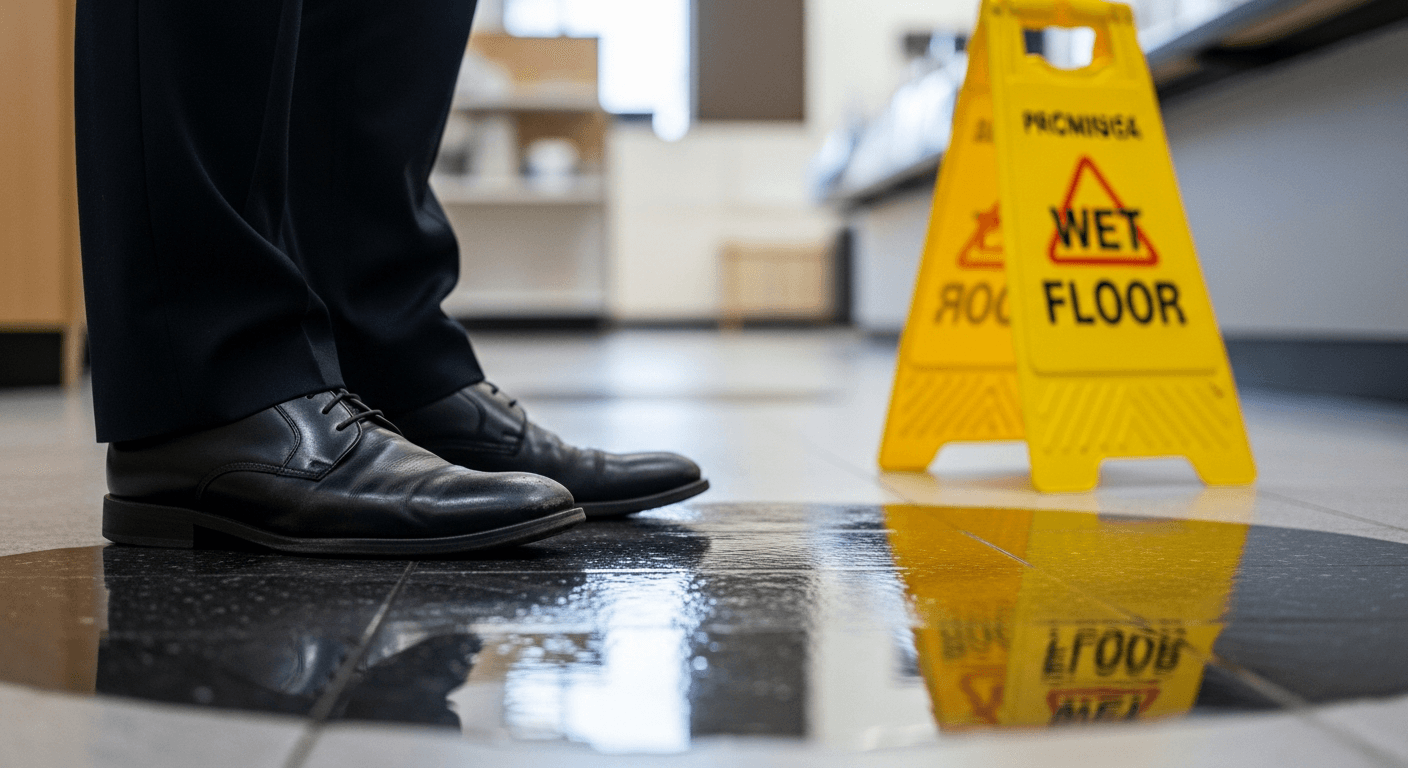
Injuries caused by wet, oily, or freshly waxed floors in grocery stores, restaurants, lobbies, and other commercial spaces where the hazard was not promptly addressed or adequately warned about with signage.
Trip and Fall Hazards
Falls caused by uneven pavement, broken sidewalks, torn carpeting, loose floorboards, cluttered aisles, or unmarked changes in elevation on commercial or residential properties.
Inadequate Security
Assaults, robberies, or other criminal acts that occur on properties where the owner failed to provide reasonable security measures such as lighting, locks, surveillance cameras, or security personnel.
Stairway and Elevator Accidents
Injuries from broken handrails, missing steps, poorly lit stairwells, malfunctioning elevators, or non-compliant escalators that violate building codes or safety regulations.
Swimming Pool Accidents
Drownings, near-drownings, and diving injuries at residential or commercial pools lacking proper fencing, depth markers, lifeguards, or anti-entrapment drain covers as required by the Virginia Graeme Baker Act.
Falling Objects and Ceiling Collapses
Injuries caused by merchandise falling from shelves, unsecured light fixtures, ceiling tiles, or structural elements that collapse due to deferred maintenance or construction defects.
Toxic Exposure on Property
Illness caused by exposure to mold, asbestos, lead paint, carbon monoxide, or other hazardous substances in residential or commercial buildings where the owner failed to remediate known contamination.
Parking Lot and Garage Injuries
Accidents in poorly maintained or inadequately lit parking areas, including vehicle-pedestrian collisions, trip hazards from potholes, and injuries from falling concrete or structural deficiencies.
Typical Premises Liability Case Timeline
Evidence Preservation and Investigation
1-4 weeksImmediate efforts to document the hazardous condition through photographs, video, witness statements, and formal preservation demands for surveillance footage and maintenance records before evidence is lost or destroyed.
Medical Treatment and Documentation
1-12 monthsCompleting medical treatment and gathering all records, bills, and expert opinions to establish the full extent of injuries. Reaching maximum medical improvement is important before valuing the claim.
Demand and Negotiation
1-3 monthsSubmitting a comprehensive demand package to the property owner's insurance carrier, followed by back-and-forth negotiations to reach a fair settlement without filing suit.
Filing Lawsuit and Discovery
3-12 monthsIf settlement negotiations fail, filing a complaint and engaging in discovery, including depositions of property managers, maintenance staff, and corporate representatives, as well as requests for inspection and repair records.
Expert Analysis and Mediation
2-4 monthsRetaining safety experts, building code consultants, and medical professionals to prepare expert reports, followed by court-ordered or voluntary mediation to attempt resolution.
Trial
3-10 daysPresenting the case to a judge or jury, including expert testimony on the hazardous condition, the property owner's knowledge and failure to act, and the extent of the plaintiff's damages.
Know Your Rights
- You have the right to seek compensation from a property owner whose negligence caused your injury, regardless of whether you were a customer, tenant, or guest.
- Property owners cannot destroy or hide evidence after being notified of a potential claim — you can send a formal spoliation letter demanding preservation of surveillance footage and records.
- You generally have the right to obtain the property owner's incident reports, maintenance logs, and prior complaint records through the discovery process.
- Comparative fault rules may reduce but do not necessarily eliminate your recovery — even if you were partially at fault, you may still be entitled to compensation in most states.
- Government entities that own property can be held liable for premises hazards, though special notice requirements and shorter filing deadlines typically apply under sovereign immunity statutes.
- You have the right to a free consultation with a premises liability attorney to evaluate your claim before making any decisions about how to proceed.
What to Look for in a Premises Liability Attorney
When selecting a premises liability attorney, look for experience with the specific type of property and hazard involved in your case, as premises liability law varies significantly depending on whether the injury occurred at a commercial establishment, government building, or private residence. A strong attorney will have experience working with investigators, building code experts, and safety engineers who can document the hazardous condition and establish that the property owner had actual or constructive notice of the danger.
Pay attention to the attorney's track record with insurance companies and their willingness to take cases to trial if necessary. Many premises liability cases are aggressively defended by property owners' insurers, who may argue that the hazard was open and obvious or that the injured person was comparatively at fault. Your attorney should be prepared to counter these defenses with thorough evidence collection, including preservation of surveillance footage, maintenance records, prior incident reports, and building inspection histories.
Questions to Ask Your Premises Liability Attorney
- 1How long do I have to file a premises liability claim in my state, and are there any special notice requirements?
- 2What evidence should I preserve right now, and can you send a spoliation letter to the property owner?
- 3Has the property owner or their insurance company already been notified of my injury?
- 4How do you plan to prove that the property owner knew about the hazardous condition?
- 5What role does comparative fault play in my state, and how might it affect my recovery?
- 6Will you retain safety or building code experts to evaluate the hazardous condition?
- 7What is your contingency fee structure, and how are litigation costs handled?
Understanding Premises Liability Legal Costs
Premises liability attorneys almost universally work on a contingency fee basis, meaning you pay no upfront costs and the attorney's fee — typically 33% of the settlement or 40% if the case goes to trial — is deducted from the recovery. The firm advances all litigation expenses, including expert witness fees, court filing costs, and investigation expenses. If the case does not result in a recovery, you owe nothing. During your initial consultation, ask about the specific contingency percentage, how expenses are handled, and whether the fee structure changes at different stages of litigation. Some firms also offer a sliding scale based on when the case resolves.
Key Legal Terms
Video Resources
These videos are provided for informational purposes only. The attorneys and organizations featured are not affiliated with or endorsed by Northwind Law.
Premises Liability Explained: When Can You Sue a Property Owner?
LegalEagle
Slip and Fall Cases: What You Need to Know
Aimee the Attorney
Understanding Property Owner Liability
Law Venture
Frequently Asked Questions About Premises Liability
Citations & Sources
- [1]Falls are the leading cause of nonfatal injuries treated in emergency departments in the United States, accounting for approximately 8 million visits annually. — CDC WISQARS Nonfatal Injury Reports, 2021
- [2]Slip-and-fall incidents account for over one million emergency room visits each year in the United States. — National Floor Safety Institute
- [3]The total cost of fall injuries in the United States exceeds $50 billion annually, including medical costs and work loss costs. — CDC Older Adult Falls Cost Data, 2020
- [4]Premises liability claims account for a significant percentage of all personal injury lawsuits filed in state courts. — U.S. DOJ Bureau of Justice Statistics, Civil Justice Survey
- [5]The Consumer Product Safety Commission tracks injuries from consumer products on premises, including those related to flooring, stairs, and structural elements. — CPSC National Electronic Injury Surveillance System (NEISS)
Ready to Discuss Your Premises Liability Case?
Speak with a experienced premises liability attorney. Free consultations available.