
Defective Auto Parts Attorneys
Experienced legal representation for defective auto parts matters across all 50 states.
About Defective Auto Parts
Defective auto parts litigation addresses injuries and deaths caused by faulty components in motor vehicles, from critical safety systems like brakes and airbags to structural elements like seat frames and fuel tanks. When an auto part fails due to a defect in its design or manufacturing, the consequences can be catastrophic, turning minor traffic incidents into life-altering crashes or causing accidents that would not have occurred at all with properly functioning components. These cases hold manufacturers of both vehicles and aftermarket parts responsible for putting dangerous products on the road.
Defective auto parts claims can involve virtually any vehicle component. Some of the most consequential litigation has involved airbag systems that deploy with excessive force or contain defective inflators, ignition switches that unexpectedly shut off the engine and disable safety systems, accelerator mechanisms that cause unintended acceleration, tire tread separations at highway speeds, defective seat belts that unlatch or fail to restrain occupants, and fuel system designs that increase the risk of post-collision fires. In each case, the legal question centers on whether the part's design or manufacture deviated from reasonable safety standards and whether that deviation caused or worsened the plaintiff's injuries.
These cases are governed by product liability law and often involve complex engineering analysis, crash reconstruction, and biomechanical testimony. The National Highway Traffic Safety Administration plays a central regulatory role, investigating safety defects, issuing recalls, and setting federal motor vehicle safety standards. Defective auto parts cases can be brought as individual lawsuits or consolidated into multidistrict litigation when a widespread defect affects many vehicle owners. Major auto parts litigation, including the Takata airbag cases and the GM ignition switch litigation, has resulted in billions of dollars in settlements and fundamental changes to automotive safety practices.
Why You Need a Defective Auto Parts Attorney
Motor vehicle crashes are a leading cause of injury and death in the United States, and defective auto parts contribute to a significant portion of these incidents. When a critical component like a brake system, airbag, or steering mechanism fails, the results can be deadly. NHTSA receives tens of thousands of consumer complaints about vehicle safety defects each year and issues hundreds of recalls affecting millions of vehicles annually. Despite this oversight, defective parts continue to reach consumers.
Defective auto parts litigation forces manufacturers to prioritize safety over cost savings and to act promptly when defects are discovered. Landmark cases have compelled major recalls, driven the adoption of safer designs, and exposed internal corporate decisions to conceal known defects. This legal accountability protects not only individual plaintiffs but every driver and passenger on the road by incentivizing the automotive industry to invest in safer components and more rigorous quality control.
Common Defective Auto Parts Cases
Defective Airbag Systems
Airbags that fail to deploy in a crash, deploy with excessive force causing facial and chest injuries, or contain defective inflators that rupture and propel metal shrapnel at vehicle occupants.
Brake System Failures
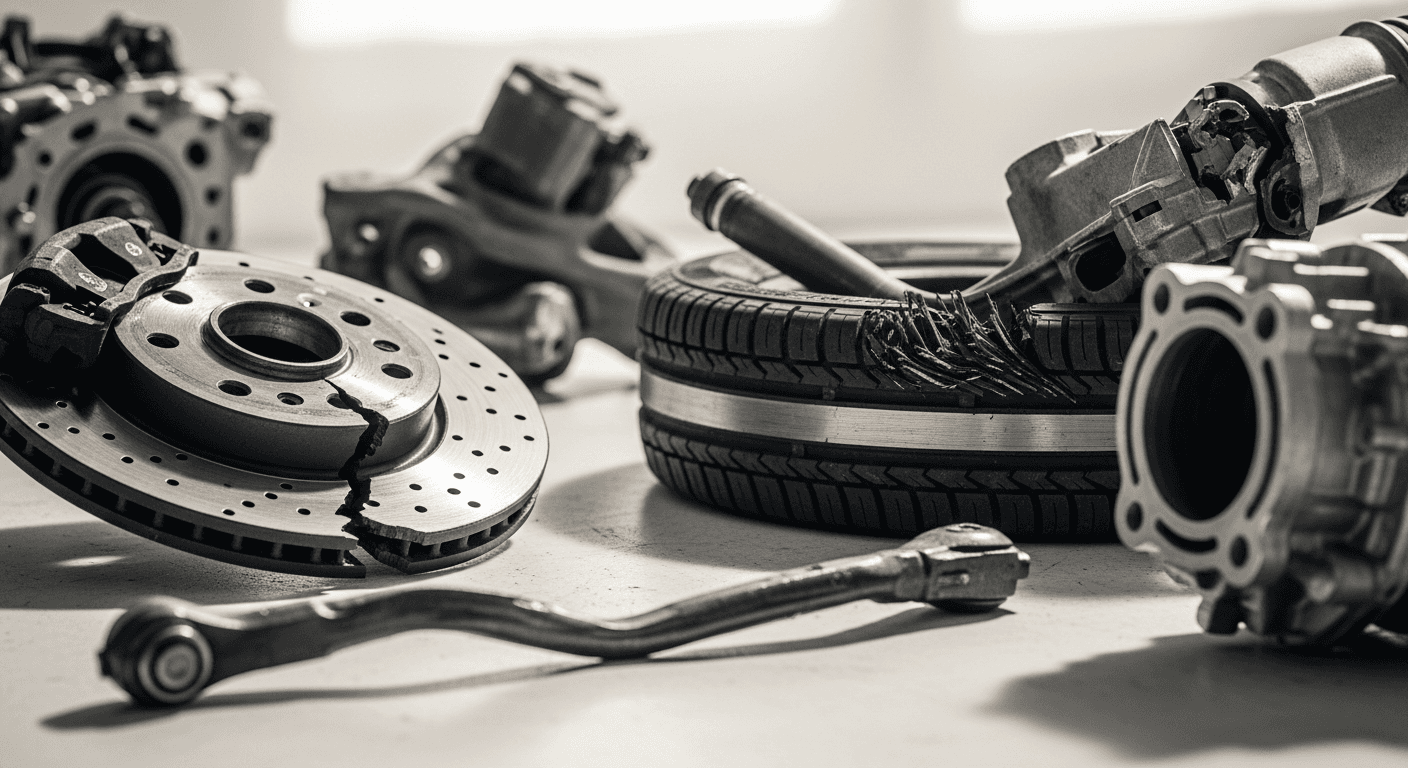
Defective brake pads, rotors, calipers, master cylinders, and anti-lock braking systems that fail to stop the vehicle properly, leading to rear-end collisions, intersection crashes, and loss of vehicle control.
Tire Defects and Tread Separations
Tires with manufacturing defects, inadequate tread bonding, or design flaws that cause blowouts and tread separations at highway speeds, resulting in loss of vehicle control and rollover accidents.
Ignition Switch and Electrical Defects
Faulty ignition switches that unexpectedly move from the run position, cutting engine power and disabling airbags, power steering, and power brakes while the vehicle is in motion.
Seat Belt and Restraint Failures
Seat belts that unlatch during impact, fail to properly retract, or have defective pretensioners, reducing occupant protection and increasing the severity of crash injuries.
Fuel System Design Defects
Poorly positioned fuel tanks, inadequate shielding, and defective fuel lines that increase the risk of fuel leaks and post-collision fires, causing severe burns and fatalities.
Steering and Suspension Failures
Defective power steering pumps, tie rods, control arms, and suspension components that cause sudden loss of steering control or vehicle instability, particularly at higher speeds.
Typical Defective Auto Parts Case Timeline
Vehicle and Parts Preservation
1-4 weeksThe vehicle and defective part are preserved in their post-accident condition. Your attorney issues spoliation letters to prevent the destruction of evidence and arranges for secure storage of the vehicle.
Crash Reconstruction & Engineering Analysis
2-6 monthsAutomotive engineers and crash reconstruction experts inspect the vehicle, analyze the failed component, and determine whether a defect caused or contributed to the crash and your injuries.
Claim Filing & Defendant Identification
1-3 monthsA complaint is filed against the vehicle manufacturer, parts manufacturer, and any other entities in the distribution chain. Recall history and NHTSA complaint data are gathered to support the claim.
Discovery & Internal Documents
12-24 monthsThe manufacturer produces internal documents including design specifications, testing results, warranty claims, prior complaint data, and communications regarding the defect. Key witnesses are deposed.
Settlement Negotiations or Trial Preparation
3-9 monthsYour attorney negotiates with the manufacturer based on the evidence gathered. If a fair settlement is not offered, the case is prepared for trial with demonstrative exhibits and expert testimony.
Trial or Resolution
1-6 monthsThe case is resolved through settlement or a jury trial. In MDL proceedings, bellwether trials may be conducted first. Appeals by the manufacturer can extend the process by additional months or years.
Know Your Rights
- You have the right to expect that your vehicle and its components meet federal motor vehicle safety standards established by NHTSA.
- Under product liability law, you can hold the vehicle manufacturer, parts manufacturer, and other entities in the supply chain liable for injuries caused by defective components.
- You can file safety complaints with NHTSA at safercar.gov, which may trigger an investigation and potential recall of the defective part.
- You have the right to be notified when your vehicle is subject to a safety recall, and the manufacturer must provide a free remedy.
- You may pursue compensation even if the crash was partially caused by another driver, if a defective part worsened your injuries beyond what they would have been otherwise.
- You have the right to obtain your vehicle's complete recall and technical service bulletin history from NHTSA and the manufacturer.
What to Look for in a Defective Auto Parts Attorney
Defective auto parts cases require an attorney with expertise in automotive product liability, crash reconstruction, and the engineering analysis needed to identify and prove component failures. Look for a firm that has handled cases involving the specific type of part at issue — airbags, tires, brakes, or electrical systems — since each requires different technical experts and legal strategies. The attorney should have access to automotive engineers, metallurgists, crash reconstructionists, and biomechanical experts who can analyze the failure and connect it to your injuries. Ask about the firm's experience working with NHTSA data, obtaining recall and complaint records, and navigating multidistrict litigation if your case involves a widespread defect. Financial resources are critical because these cases require expensive expert testing and analysis, often pitting individual plaintiffs against major automakers with vast legal budgets.
Questions to Ask Your Defective Auto Parts Attorney
- 1Have you handled cases involving this specific type of auto part defect before?
- 2What automotive engineers and crash reconstruction experts will you retain to analyze the failure?
- 3Has NHTSA issued any recalls, investigations, or technical service bulletins related to this defect?
- 4Is my case likely to be part of a multidistrict litigation, and how would that affect the timeline?
- 5Will my vehicle need to be preserved and inspected, and how should I handle that process?
- 6What is the statute of limitations for defective auto parts claims in my state?
- 7Does your firm have the financial resources to litigate against a major automaker?
Understanding Defective Auto Parts Legal Costs
Defective auto parts attorneys work on a contingency fee basis, typically charging 33% to 40% of the recovery. These cases require substantial investment in crash reconstruction experts, automotive engineers, metallurgical analysis, biomechanical experts, and demonstrative exhibits. Expert costs can range from fifty thousand to several hundred thousand dollars in complex cases. The firm advances all litigation expenses and recoups them from any recovery. If no recovery is obtained, you owe nothing for attorney fees or costs. Given the significant financial investment required, firms evaluate the strength of engineering evidence and the severity of injuries before committing to representation.
Key Legal Terms
Video Resources
These videos are provided for informational purposes only. The attorneys and organizations featured are not affiliated with or endorsed by Northwind Law.
What is Product Liability?
Tech Policy Lab, University of Washington
Product Liability Law: Liability for Manufacturing Defects
Tech Policy Lab, University of Washington
Introduction to Product Liability: Module 1 of 5
LawShelf
Frequently Asked Questions About Defective Auto Parts
Citations & Sources
- [1]NHTSA issued over 900 vehicle safety recalls in 2023, affecting tens of millions of vehicles. — National Highway Traffic Safety Administration
- [2]There were 42,795 motor vehicle crash fatalities in the United States in 2022. — NHTSA Traffic Safety Facts
- [3]The Takata airbag recall, the largest in U.S. history, affected approximately 67 million airbag inflators in 42 million vehicles. — National Highway Traffic Safety Administration, Takata Recall Spotlight
- [4]NHTSA receives over 30,000 consumer complaints annually regarding potential vehicle safety defects. — National Highway Traffic Safety Administration
Ready to Discuss Your Defective Auto Parts Case?
Speak with a experienced defective auto parts attorney. Free consultations available.