
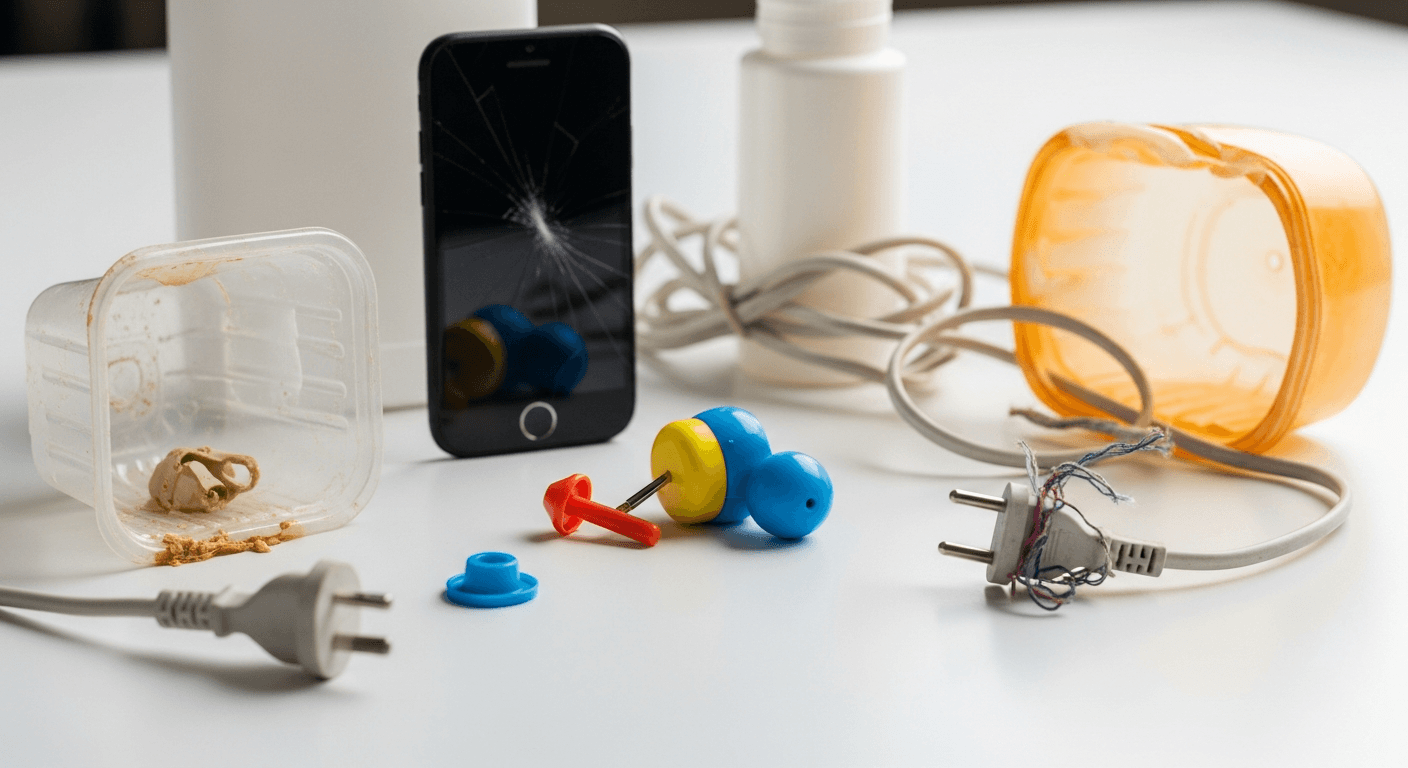
Dangerous Consumer Products Attorneys
Experienced legal representation for dangerous consumer products matters across all 50 states.
About Dangerous Consumer Products
Dangerous consumer products litigation addresses injuries caused by everyday household items, personal care products, recreational equipment, and other consumer goods that pose unreasonable risks due to defects in their design, manufacture, or labeling. This area of law covers an enormous range of products — from appliances and electronics to furniture, clothing, cosmetics, and cleaning supplies — and holds manufacturers, importers, distributors, and retailers responsible when these items injure consumers. The Consumer Product Safety Commission regulates the safety of thousands of consumer product categories but cannot test every item before it reaches store shelves, leaving consumers vulnerable to products that slip through the regulatory framework.
Dangerous consumer product claims arise under three primary theories. A design defect exists when the product's fundamental concept is unreasonably hazardous, even when manufactured exactly as intended. A manufacturing defect occurs when production errors cause individual units to deviate from the intended design in a dangerous way. A failure to warn involves inadequate safety instructions, missing hazard labels, or insufficient disclosure of risks that would have allowed consumers to use the product safely. Many dangerous consumer product cases also involve violations of specific CPSC safety standards, voluntary industry standards, or labeling requirements under federal and state law.
The CPSC maintains the National Electronic Injury Surveillance System, which tracks product-related injuries treated in hospital emergency departments across the country. This data reveals that millions of Americans are injured by consumer products every year, with children and elderly adults facing disproportionate risk. Successful litigation in this area not only compensates individual victims but drives product recalls, forces safety improvements, and establishes precedents that protect future consumers from similar harm.
Why You Need a Dangerous Consumer Products Attorney
Consumer products surround us in every aspect of daily life, and we depend on them being safe for their intended use. When manufacturers cut corners on safety testing, use cheaper but hazardous materials, or fail to provide adequate warnings, the consequences fall on ordinary families. The CPSC estimates that the societal cost of consumer product injuries, deaths, and property damage exceeds one trillion dollars annually. Despite hundreds of recalls each year, dangerous products continue to reach homes and injure consumers.
Dangerous consumer products litigation plays a critical role in protecting public safety. When companies face substantial financial liability for selling hazardous products, they have a powerful incentive to invest in better design, quality control, and labeling. High-profile lawsuits have led to the removal of toxic chemicals from children's products, the recall of fire-prone appliances, and the strengthening of safety standards for furniture, electronics, and personal care items. This legal framework gives consumers a meaningful remedy when the products they trust cause harm.
Common Dangerous Consumer Products Cases
Fire-Prone Appliances and Electronics
Household appliances, chargers, and electronic devices that overheat, short-circuit, or catch fire due to defective wiring, inadequate thermal protection, or faulty lithium-ion batteries.
Toxic Chemicals in Consumer Goods
Products containing undisclosed harmful substances such as lead in paint, formaldehyde in furniture, PFAS in cookware, and carcinogens in personal care products and cosmetics.
Dangerous Children's Products
Toys with choking hazards, cribs with entrapment risks, high chairs that collapse, and other children's items that fail to meet CPSC safety standards or contain toxic materials.
Furniture Tip-Over Hazards
Dressers, bookshelves, and television stands that are prone to tipping over onto children due to inadequate stability, missing anti-tip hardware, or failure to meet voluntary stability standards.
Defective Protective Equipment
Helmets, safety goggles, life jackets, and other protective gear that fail to provide the level of protection advertised or required by applicable safety standards.
Contaminated Personal Care Products
Cosmetics, shampoos, skin creams, and other personal care items contaminated with bacteria, heavy metals, or undisclosed allergens that cause skin reactions, infections, or systemic health effects.
Defective Home Improvement Products
Ladders that collapse, power tools without proper guards, pressure washers with burst-prone hoses, and other home improvement items that cause injuries due to structural failures or missing safety features.
Hazardous Clothing and Textiles
Clothing and fabrics that are excessively flammable, contain allergenic dyes or chemical treatments, or have drawstrings and design elements that pose strangulation risks especially for children.
Typical Dangerous Consumer Products Case Timeline
Product Preservation & Documentation
1-2 weeksThe dangerous product is secured and preserved in its current condition along with packaging, receipts, and instructions. Photographs and video of the product and the injury scene are taken to document the evidence.
Expert Investigation & Testing
2-4 monthsProduct safety engineers, fire investigators, toxicologists, or other experts analyze the product to identify the specific defect and determine how it caused the injury.
Claim Filing & Supply Chain Investigation
1-3 monthsA lawsuit is filed naming the manufacturer, importer, distributor, and retailer. Investigation into the supply chain identifies all responsible parties, which is particularly important for imported products.
Discovery & Regulatory Records
6-18 monthsBoth sides exchange documents including design files, quality control records, prior complaint histories, and any CPSC correspondence. Depositions of corporate representatives and engineers are conducted.
Settlement Negotiations
2-6 monthsYour attorney negotiates with the defendants based on expert findings and discovery evidence. Mediation may be used to facilitate discussions. Many consumer products cases settle during this phase.
Trial or Final Resolution
1-4 monthsIf settlement negotiations fail, the case proceeds to trial. A jury evaluates the evidence and determines liability and damages. Post-trial motions and potential appeals can extend the timeline further.
Know Your Rights
- You have the right to expect that consumer products sold in the United States are reasonably safe for their intended and foreseeable uses.
- You can report dangerous products to the CPSC at SaferProducts.gov, and your report becomes part of the public record that other consumers can access.
- Under strict liability, you do not need to prove the manufacturer was careless — only that the product was defective and caused your injury.
- You may bring claims against any party in the supply chain, including foreign manufacturers, domestic importers, distributors, and retail sellers.
- Product recalls do not bar you from filing a lawsuit, and a recall can serve as powerful evidence that the manufacturer acknowledged the defect.
- You have the right to compensation even if you received the product as a gift, bought it secondhand, or borrowed it from someone else.
- State consumer protection laws may provide additional remedies including statutory damages and attorney fee recovery in certain product safety cases.
What to Look for in a Dangerous Consumer Products Attorney
An attorney handling dangerous consumer products cases should have experience with product liability litigation and the CPSC regulatory framework. Look for a firm with the resources to retain experts in product design, materials science, toxicology, and fire investigation, depending on the nature of the product and your injuries. Ask whether the attorney has handled cases involving your specific type of product, as the engineering analysis and regulatory standards differ between categories. The firm should be familiar with CPSC recall procedures, NEISS data, and applicable voluntary and mandatory safety standards. Evaluate whether the firm has the financial capacity to advance costs for expert testing, product analysis, and litigation expenses. A strong consumer products attorney will thoroughly investigate the product's history, identify all potentially liable parties in the supply chain, and pursue the fullest possible recovery.
Questions to Ask Your Dangerous Consumer Products Attorney
- 1Have you handled cases involving this type of consumer product before?
- 2What experts will you retain to analyze the product defect and how long will the analysis take?
- 3Has this product been subject to any CPSC recalls or safety investigations?
- 4Who are the potentially liable parties, and are any of them foreign manufacturers that may be difficult to reach?
- 5What is the statute of limitations for consumer product claims in my state?
- 6Does your firm advance all expert and litigation costs on a contingency basis?
- 7What is your realistic assessment of the timeline and potential value of my case?
Understanding Dangerous Consumer Products Legal Costs
Dangerous consumer products attorneys typically work on a contingency fee basis, charging 33% to 40% of the recovery. Case costs vary depending on the complexity of the product and the type of expert analysis required. Fire investigation, toxicology testing, materials analysis, and engineering evaluations can cost from several thousand to over a hundred thousand dollars in complex cases. The law firm advances all costs and recovers them from any settlement or verdict. If no recovery is obtained, you generally owe nothing for fees or costs. Firms evaluate potential cases based on the severity of injuries, the availability of the defective product as evidence, and the strength of the causal connection between the defect and the harm.
Key Legal Terms
Video Resources
These videos are provided for informational purposes only. The attorneys and organizations featured are not affiliated with or endorsed by Northwind Law.
What is Product Liability?
Tech Policy Lab, University of Washington
Product Liability Law: Liability for Manufacturing Defects
Tech Policy Lab, University of Washington
Introduction to Product Liability: Module 1 of 5
LawShelf
Frequently Asked Questions About Dangerous Consumer Products
Citations & Sources
- [1]Approximately 11.7 million consumers were treated in emergency departments for injuries associated with consumer products in 2022. — CPSC National Electronic Injury Surveillance System (NEISS)
- [2]The CPSC issued over 300 consumer product recalls in 2023, covering millions of product units across hundreds of categories. — U.S. Consumer Product Safety Commission
- [3]The annual cost of deaths, injuries, and property damage from consumer product incidents exceeds $1 trillion. — U.S. Consumer Product Safety Commission
- [4]Children under 15 account for a disproportionate share of consumer product-related injuries, with toy-related injuries alone resulting in approximately 152,000 emergency department visits annually. — CPSC Toy-Related Deaths and Injuries Report, 2022
Ready to Discuss Your Dangerous Consumer Products Case?
Speak with a experienced dangerous consumer products attorney. Free consultations available.