
Boundary Disputes Attorneys
Experienced legal representation for boundary disputes matters across all 50 states.
About Boundary Disputes
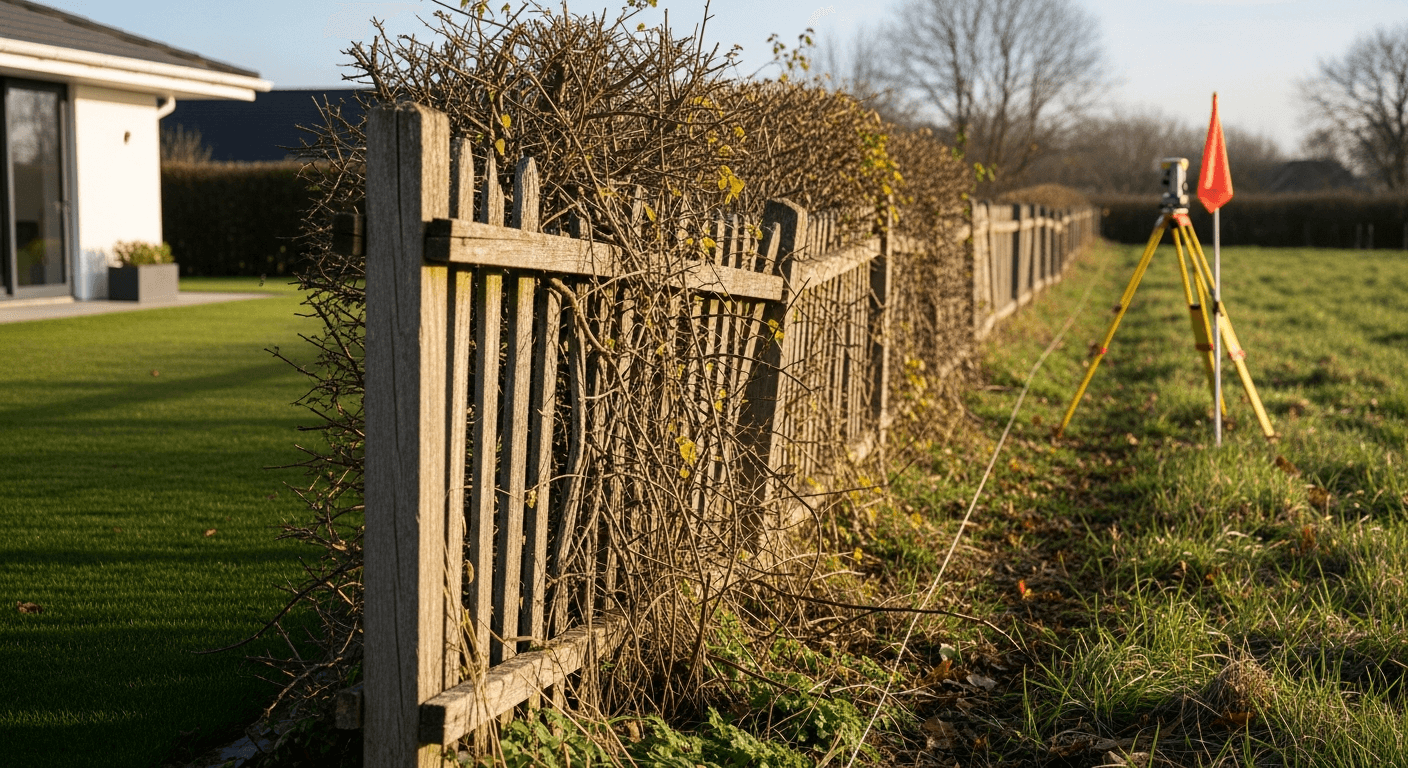
Boundary disputes arise when neighboring property owners disagree about the location of the line separating their properties. These conflicts are among the most common real property disputes in the United States and can involve disagreements over the interpretation of deed descriptions, conflicting survey results, the legal significance of physical markers such as fences, walls, and hedgerows, and the application of doctrines like adverse possession and acquiescence. Boundary disputes can range from minor disagreements about a few inches of land to major conflicts involving acres of property and significant economic value.
Boundary dispute attorneys analyze property deeds, historical surveys, tax maps, aerial photographs, and physical evidence on the ground to determine the correct location of property boundaries. They work closely with licensed professional land surveyors who provide the technical analysis and expert testimony needed to establish boundary locations in legal proceedings. The resolution of boundary disputes requires understanding both the legal framework — including state property law, evidence rules, and equitable doctrines — and the technical aspects of land surveying, deed interpretation, and monument identification.
Many boundary disputes are complicated by the passage of time. Property owners may have relied on physical markers — such as fences, stone walls, or tree lines — that do not correspond to the actual surveyed boundary for decades. When one party commissions a new survey revealing that the actual boundary differs from the assumed boundary, conflict erupts. These situations invoke legal doctrines such as adverse possession, boundary by acquiescence, boundary by agreement, and estoppel, which can override the surveyed boundary when certain conditions are met. The emotional intensity of boundary disputes between neighbors often makes these cases particularly challenging to resolve, requiring attorneys who are skilled in both litigation and negotiation.
Why You Need a Boundary Disputes Attorney
Property boundaries define what you own, what you can build, and how you can use your land. Even small boundary discrepancies can have significant financial consequences. According to the National Society of Professional Surveyors, boundary disputes account for a substantial portion of property-related litigation in state courts, and the costs of resolving these disputes — including attorney fees, surveyor fees, and potential loss of property — can quickly exceed the value of the disputed land itself.
Beyond the financial impact, unresolved boundary disputes create clouds on title that can prevent property sales and complicate mortgage financing. Title companies may refuse to insure property with active boundary disputes, effectively freezing the property until the dispute is resolved. Boundary disputes also affect daily quality of life, straining relationships between neighbors who must continue living next to each other. Addressing boundary issues promptly and strategically — through survey, negotiation, or when necessary, litigation — is essential to protecting your property rights and preserving the value of your real estate.
Common Boundary Disputes Cases
Survey Discrepancy Disputes
Resolving conflicts between neighboring owners when a new survey reveals that the actual property boundary differs from the location of fences, structures, or other physical markers that the parties have treated as the boundary.
Fence Line & Encroachment Disputes
Addressing situations where fences, driveways, landscaping, sheds, or other improvements built by one property owner encroach across the boundary onto the neighboring property.
Adverse Possession Boundary Claims
Prosecuting or defending claims that a property owner has acquired ownership of a disputed strip of land through continuous, open, and hostile possession for the statutory period.
Boundary by Acquiescence
Establishing or challenging a boundary based on evidence that neighboring owners recognized and treated a particular line — such as a fence or natural feature — as the boundary for a long period of time.
Deed Description Interpretation
Resolving disputes arising from ambiguous, inconsistent, or conflicting legal descriptions in deeds, including conflicts between metes and bounds descriptions, plat references, and monument calls.
Boundary Line Agreements
Negotiating and drafting legally binding agreements between neighbors that establish a mutually agreed-upon boundary, which is then recorded to provide certainty and prevent future disputes.
Typical Boundary Disputes Case Timeline
Deed & Record Research
1-3 weeksReviewing the deed descriptions, prior surveys, tax maps, and chain of title for both properties to understand the documented boundary and identify any discrepancies or ambiguities.
Professional Survey
2-4 weeksCommissioning a boundary survey by a licensed professional land surveyor to locate the boundary based on the deed descriptions, recorded plats, monuments, and field evidence.
Negotiation & Demand
2-6 weeksPresenting the survey results to the neighboring owner and attempting to resolve the dispute through direct negotiation, a boundary line agreement, or mediation.
Litigation (if necessary)
6-18 monthsFiling a lawsuit to establish the boundary, conducting discovery including depositions and exchange of survey evidence, and preparing for trial.
Trial & Judgment
1-3 daysPresenting evidence at trial, including surveyor testimony and historical evidence, and obtaining a court judgment establishing the legal boundary between the properties.
Know Your Rights
- You have the right to have your property boundaries established by a licensed professional land surveyor based on the legal description in your deed.
- If a neighbor's structure or improvement encroaches on your property, you have the right to demand its removal and to seek legal action if the neighbor refuses.
- You have the right to enter into a boundary line agreement with your neighbor to settle a dispute, and the agreement can be recorded to provide certainty for future owners.
- If you have openly possessed and maintained a strip of your neighbor's land for the statutory period, you may have the right to claim ownership through adverse possession.
- You have the right to challenge a neighbor's survey results by commissioning your own independent survey from a different licensed surveyor.
- In most jurisdictions, you can petition the court to establish your property boundary through a quiet title action or boundary line action.
What to Look for in a Boundary Disputes Attorney
When seeking an attorney for a boundary dispute, look for someone with experience in real property litigation and a strong working relationship with licensed professional land surveyors. The attorney should be familiar with your state's specific laws on boundary disputes, including statutes of limitation for adverse possession, the legal standards for boundary by acquiescence, and the rules governing the priority of different elements in deed descriptions (such as monuments over courses and distances).
Because many boundary disputes can be resolved through negotiation and boundary line agreements rather than expensive litigation, look for an attorney who is skilled in both dispute resolution and courtroom advocacy. Ask about their experience with cases similar to yours and their typical approach to resolving boundary conflicts. Consider whether the attorney is familiar with the local courts and judges who typically handle property disputes in your jurisdiction, as local knowledge can be an advantage in these highly fact-specific cases.
Questions to Ask Your Boundary Disputes Attorney
- 1Based on the deed descriptions and surveys, where does the legal boundary appear to be located?
- 2Is the discrepancy between the surveyed boundary and the physical markers significant enough to warrant legal action?
- 3Would adverse possession or boundary by acquiescence apply to this situation, and does that help or hurt our position?
- 4Is a boundary line agreement a viable option, and what are the pros and cons compared to litigation?
- 5What are the estimated costs for resolving this dispute through negotiation versus litigation?
- 6How strong is our surveyor's opinion, and could the opposing party's surveyor reach a different conclusion?
- 7If we go to court, what evidence will we need to present, and what is the likely outcome?
Understanding Boundary Disputes Legal Costs
Boundary dispute costs include both legal fees and surveyor costs. A professional boundary survey typically costs $500 to $3,000 depending on the size and complexity of the parcel. If the dispute can be resolved through negotiation and a boundary line agreement, total legal costs may be $2,000 to $7,000. If litigation is required, costs escalate significantly — a contested boundary dispute case typically costs $10,000 to $40,000 in attorney fees, plus $2,000 to $10,000 for surveyor expert testimony. Complex cases involving adverse possession claims, multiple surveys, and extensive historical research can cost $40,000 to $75,000 or more. Most boundary dispute attorneys charge hourly rates of $200 to $400 per hour. In some states, the prevailing party may recover attorney fees and surveyor costs from the losing party.
Key Legal Terms
Video Resources
These videos are provided for informational purposes only. The attorneys and organizations featured are not affiliated with or endorsed by Northwind Law.
Property Boundary Disputes: Understanding Your Rights
Steve Lehto
How Land Surveyors Determine Property Lines
Practical Engineering
Adverse Possession Explained
The Law Simplified
Frequently Asked Questions About Boundary Disputes
Citations & Sources
- [1]Boundary disputes represent a significant portion of property-related civil litigation in state courts across the United States, frequently involving conflicting surveys and competing deed interpretations. — National Center for State Courts
- [2]The priority of deed elements in most jurisdictions follows a hierarchy: monuments control over courses and distances, courses and distances control over area, and specific descriptions control over general descriptions. — American Bar Association, Real Property Section
- [3]Adverse possession statutory periods vary significantly across the United States, ranging from 5 years in some states to 20 years or more in others, with additional requirements varying by jurisdiction. — National Conference of State Legislatures
- [4]Professional boundary surveys serve as the primary means of establishing property lines and are typically required by courts as evidence in boundary dispute litigation. — National Society of Professional Surveyors
Ready to Discuss Your Boundary Disputes Case?
Speak with a experienced boundary disputes attorney. Free consultations available.