
Zoning & Land Use Attorneys
Experienced legal representation for zoning & land use matters across all 50 states.
About Zoning & Land Use
Zoning and land use law governs how property owners can develop, modify, and utilize their land. Local governments exercise their police power to enact zoning ordinances that divide municipalities into districts — residential, commercial, industrial, agricultural, and mixed-use — each with specific regulations controlling building height, density, lot coverage, setbacks, parking requirements, and permitted uses. These regulations shape the physical character of communities, protect property values, and balance competing interests between development and neighborhood preservation.
Zoning and land use attorneys represent property owners, developers, businesses, and community organizations before local planning commissions, zoning boards of appeals, city councils, and in court proceedings. Their work spans a wide range of matters, including obtaining zoning variances and special use permits, pursuing rezoning applications, challenging adverse zoning decisions, and navigating the subdivision and site plan approval process. They also help clients understand and comply with comprehensive plans, overlay districts, historic preservation ordinances, and environmental review requirements such as those imposed by the National Environmental Policy Act (NEPA) and state equivalents.
The intersection of property rights and government regulation makes zoning law particularly complex. The U.S. Supreme Court established the constitutionality of zoning in the landmark 1926 case Village of Euclid v. Ambler Realty Co., but property owners retain constitutional protections against regulations that amount to a taking without just compensation under the Fifth and Fourteenth Amendments. Modern zoning law continues to evolve as communities address affordable housing mandates, short-term rental regulations, accessory dwelling units, renewable energy installations, and the growing tension between local control and state preemption of zoning authority.
Why You Need a Zoning & Land Use Attorney
Zoning regulations directly affect what you can build on your property, how you can use it, and ultimately its market value. A residential property zoned for single-family use is worth significantly less to a developer than one zoned for multifamily or commercial use. According to the National Association of Home Builders, regulatory costs — including zoning compliance, impact fees, and the approval process — account for approximately 23.8% of the final price of a new single-family home, adding tens of thousands of dollars in costs that are passed on to buyers.
For businesses, zoning compliance is essential before signing a lease or purchasing commercial property. Operating a business in a zone that does not permit that use can result in code enforcement actions, fines, forced closure, and even criminal penalties. Property owners who fail to obtain required approvals before beginning construction risk stop-work orders, demolition requirements, and substantial financial losses. Understanding your zoning rights and the approval process is critical to protecting your investment and achieving your development goals.
Common Zoning & Land Use Cases
Zoning Variance Applications
Representing property owners seeking variances from strict zoning requirements, such as setback reductions, height exceptions, or density increases, by demonstrating practical difficulty or unnecessary hardship before the board of zoning appeals.
Special Use & Conditional Use Permits
Obtaining permits for uses that are conditionally allowed within a zoning district, such as churches in residential zones, drive-through restaurants, cell towers, or medical facilities, subject to specific conditions imposed by the approving authority.
Rezoning & Map Amendments
Petitioning local legislative bodies to change the zoning classification of a property to allow a proposed development or use that is not permitted under the current zoning designation.
Site Plan & Subdivision Approval
Guiding developers through the municipal approval process for site plans and subdivisions, addressing issues such as traffic impact, stormwater management, landscaping, and infrastructure requirements.
Zoning Enforcement Defense
Defending property owners and businesses against zoning code enforcement actions, citations, and penalties for alleged violations of use restrictions, building regulations, or permit conditions.
Eminent Domain & Takings Claims
Challenging government actions that effectively take private property rights through overly restrictive regulations or pursuing just compensation when regulatory takings diminish property value.
Comprehensive Plan Challenges
Challenging zoning decisions that are inconsistent with the local comprehensive plan or opposing comprehensive plan amendments that would adversely affect a client's property or neighborhood.
Historic Preservation & Landmark Disputes
Navigating historic preservation ordinances that restrict alterations, demolition, or new construction within designated historic districts or on individually landmarked properties.
Typical Zoning & Land Use Case Timeline
Initial Zoning Analysis
1-2 weeksReviewing the applicable zoning ordinance, comprehensive plan, and property records to determine current zoning, permitted uses, and available approval pathways for the proposed project.
Application Preparation
2-6 weeksPreparing the zoning application, supporting documentation, site plans, traffic studies, environmental assessments, and other materials required by the local approval authority.
Public Notice & Community Outreach
2-4 weeksPublishing required legal notices, notifying adjacent property owners, posting the property, and conducting community outreach to address potential neighborhood concerns.
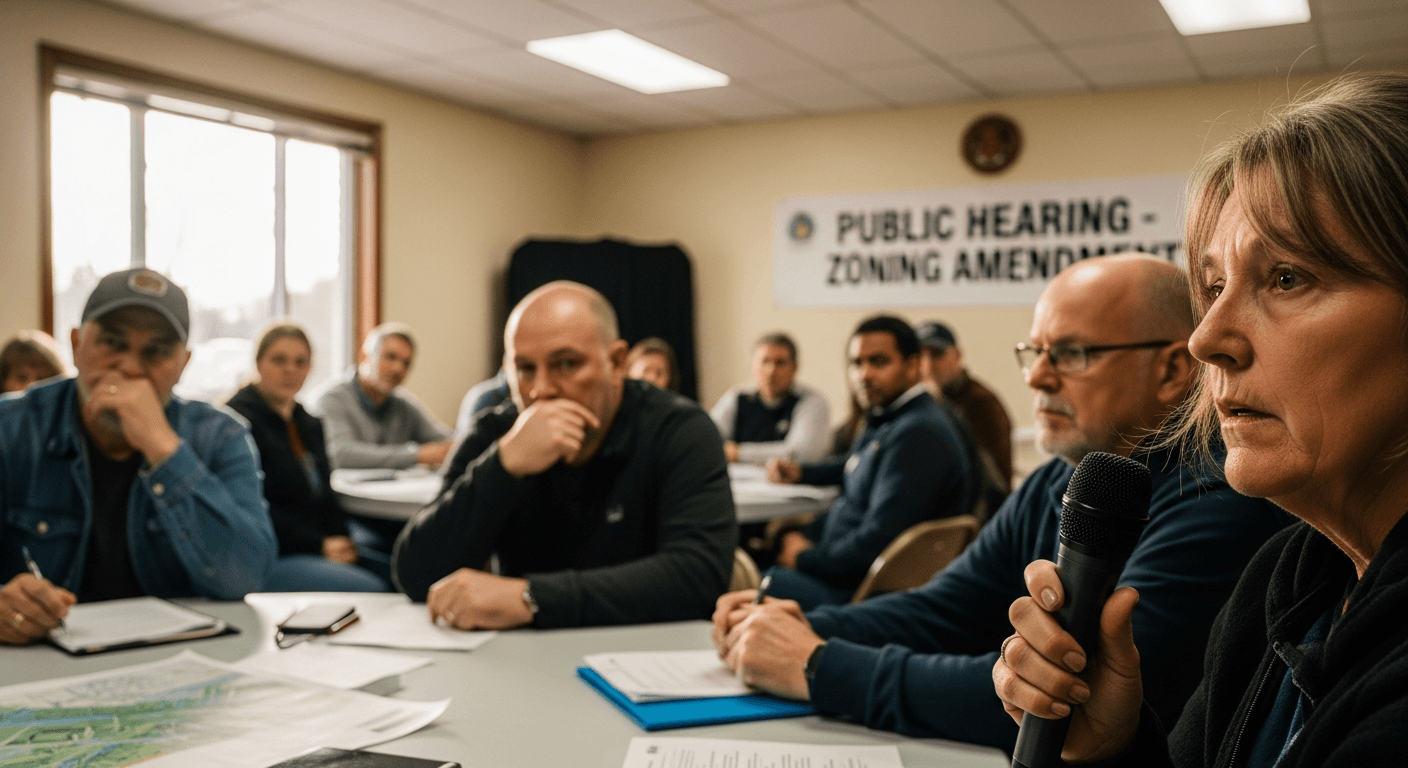
Public Hearing
1-2 daysPresenting the application before the planning commission, zoning board of appeals, or local legislative body, responding to questions, and addressing public comments and objections.
Decision & Conditions
2-6 weeksReceiving the written decision, reviewing any conditions imposed on the approval, and determining whether to accept the conditions, negotiate modifications, or appeal an adverse decision.
Appeal Period or Litigation
3-18 monthsIf the application is denied or conditions are unacceptable, filing an administrative appeal or court action to challenge the decision on legal or procedural grounds.
Know Your Rights
- You have the right to use your property in any manner permitted by the applicable zoning ordinance without needing special government approval.
- If a zoning regulation imposes an undue hardship on your property, you may apply for a variance to obtain relief from the strict requirements of the ordinance.
- You have the right to receive proper notice of any zoning change or application that affects your property, and to appear and be heard at public hearings.
- Government regulations that eliminate all economically viable use of your property may constitute a taking requiring just compensation under the Fifth Amendment.
- You have the right to appeal adverse zoning decisions to the courts, which will review whether the decision was arbitrary, capricious, or unsupported by the evidence.
- Nonconforming uses — lawful uses that existed before a zoning change — are generally allowed to continue under "grandfathering" provisions in most jurisdictions.
- You have the right to request a zoning determination or interpretation letter from local officials to clarify how the zoning ordinance applies to your property.
What to Look for in a Zoning & Land Use Attorney
When selecting a zoning and land use attorney, prioritize local experience above all else. Zoning law is intensely local — each municipality has its own ordinances, procedures, application requirements, and political dynamics. An attorney who regularly practices before your local planning commission and zoning board will understand the specific standards applied, the concerns of board members, and the procedural requirements that must be satisfied for a successful application.
Look for an attorney with a track record of handling matters similar to yours, whether that involves variances, rezoning petitions, subdivision approvals, or zoning litigation. Strong zoning attorneys combine legal knowledge with practical experience in land planning, environmental regulations, and community engagement. They should be able to explain the approval process, realistic timelines, potential opposition, and the likelihood of success before you commit significant resources. Ask about their relationships with local planners, engineers, and other professionals who may be needed to support your application.
Questions to Ask Your Zoning & Land Use Attorney
- 1How often do you practice before our local planning commission and zoning board, and how familiar are you with our municipality's ordinances?
- 2What is the realistic likelihood of obtaining approval for my proposed project, and what conditions might the board impose?
- 3Are there alternative zoning strategies — such as a different type of application or a modified project design — that might improve our chances of approval?
- 4What professional studies or expert reports will be needed to support the application, and what will they cost?
- 5How should we handle community opposition, and do you recommend proactive outreach to neighbors before the hearing?
- 6If our application is denied, what are our options for appeal, and what are the costs and timeline involved?
- 7Are there any pending changes to the zoning ordinance or comprehensive plan that could affect our project?
Understanding Zoning & Land Use Legal Costs
Zoning and land use attorney fees vary significantly based on the type of matter. Simple residential variance applications may cost $2,000 to $5,000 in legal fees, plus application fees charged by the municipality. Commercial rezoning petitions typically range from $10,000 to $50,000 in legal fees, depending on complexity and opposition. Large-scale development projects requiring multiple approvals, environmental review, and community engagement can generate legal fees of $50,000 to $200,000 or more. Zoning litigation, including appeals of adverse decisions and regulatory takings claims, typically costs $25,000 to $150,000 depending on complexity and duration. Most zoning attorneys bill hourly at rates of $250 to $500 per hour. Additional costs include application and filing fees, professional studies (traffic, environmental, engineering), surveyor fees, and expert witness fees for contested proceedings.
Key Legal Terms
Video Resources
These videos are provided for informational purposes only. The attorneys and organizations featured are not affiliated with or endorsed by Northwind Law.
Zoning Explained
City Beautiful
How Zoning Laws Are Holding Back America's Cities
Wendover Productions
Land Use Planning and Zoning
PlanningTank
Frequently Asked Questions About Zoning & Land Use
Citations & Sources
- [1]Regulations imposed by all levels of government account for 23.8% of the final price of a new single-family home built for sale, according to NAHB research. — National Association of Home Builders, Government Regulation in the Price of a New Home (2021)
- [2]The U.S. Supreme Court upheld the constitutionality of zoning in Village of Euclid v. Ambler Realty Co., 272 U.S. 365 (1926), establishing that zoning is a valid exercise of state police power. — Village of Euclid v. Ambler Realty Co., 272 U.S. 365 (1926)
- [3]A regulation that denies all economically beneficial or productive use of land constitutes a per se taking requiring compensation under the Fifth Amendment. — Lucas v. South Carolina Coastal Council, 505 U.S. 1003 (1992)
- [4]There are approximately 30,000 local governments in the United States with some form of zoning or land use regulation, each with its own set of rules and approval processes. — American Planning Association
- [5]Exclusionary zoning practices have been linked to housing affordability challenges, racial segregation, and reduced economic mobility in communities across the country. — Brookings Institution, Exclusionary Zoning Research
Ready to Discuss Your Zoning & Land Use Case?
Speak with a experienced zoning & land use attorney. Free consultations available.