
Student Rights Attorneys
Experienced legal representation for student rights matters across all 50 states.
About Student Rights
Student rights law encompasses the legal protections afforded to students at all educational levels, from elementary school through university, under the U.S. Constitution, federal statutes, state laws, and institutional policies. The landmark Supreme Court decision in Tinker v. Des Moines Independent Community School District (1969) established that students do not shed their constitutional rights at the schoolhouse gate, setting the foundation for decades of jurisprudence balancing student freedoms against institutional interests in maintaining an orderly educational environment.
Federal laws protecting student rights include the First Amendment (speech, religion, and association), the Fourth Amendment (protection from unreasonable searches), the Fourteenth Amendment (due process and equal protection), Title IX (sex-based discrimination), Title VI (race-based discrimination), the Family Educational Rights and Privacy Act (FERPA), Section 504 and the ADA (disability accommodations), and the Equal Access Act (student organizations). State constitutions and statutes often provide additional protections, and institutional codes of conduct create contractual obligations that schools must follow.
Student rights issues arise in a wide variety of contexts including disciplinary proceedings that may affect academic standing or result in suspension or expulsion, violations of free speech and expression rights, searches of student property or electronic devices, privacy violations involving educational records, discrimination based on race, gender, disability, religion, or sexual orientation, bullying and harassment, and disputes over grades, academic integrity, and degree conferral. The legal landscape has grown increasingly complex with the rise of social media expression, cyberbullying, school safety concerns, and the expansion of Title IX enforcement to cover sexual harassment and assault on campus.
Why You Need a Student Rights Attorney
Students are among the most vulnerable members of our society, and the school environment plays a formative role in shaping their understanding of justice, fairness, and civic participation. When schools violate student rights, the harm extends beyond the individual student to the educational community as a whole. Unfair disciplinary processes teach students that authority is arbitrary rather than principled. Suppression of student expression teaches that conformity is valued over critical thinking. Discriminatory treatment based on race, gender, or disability reinforces inequality. Protecting student rights is not about undermining school authority; it is about ensuring that the exercise of authority adheres to fundamental principles of fairness and constitutional governance. Students who experience their rights being respected are more likely to become engaged, responsible citizens.
Common Student Rights Cases
Free Speech and Expression
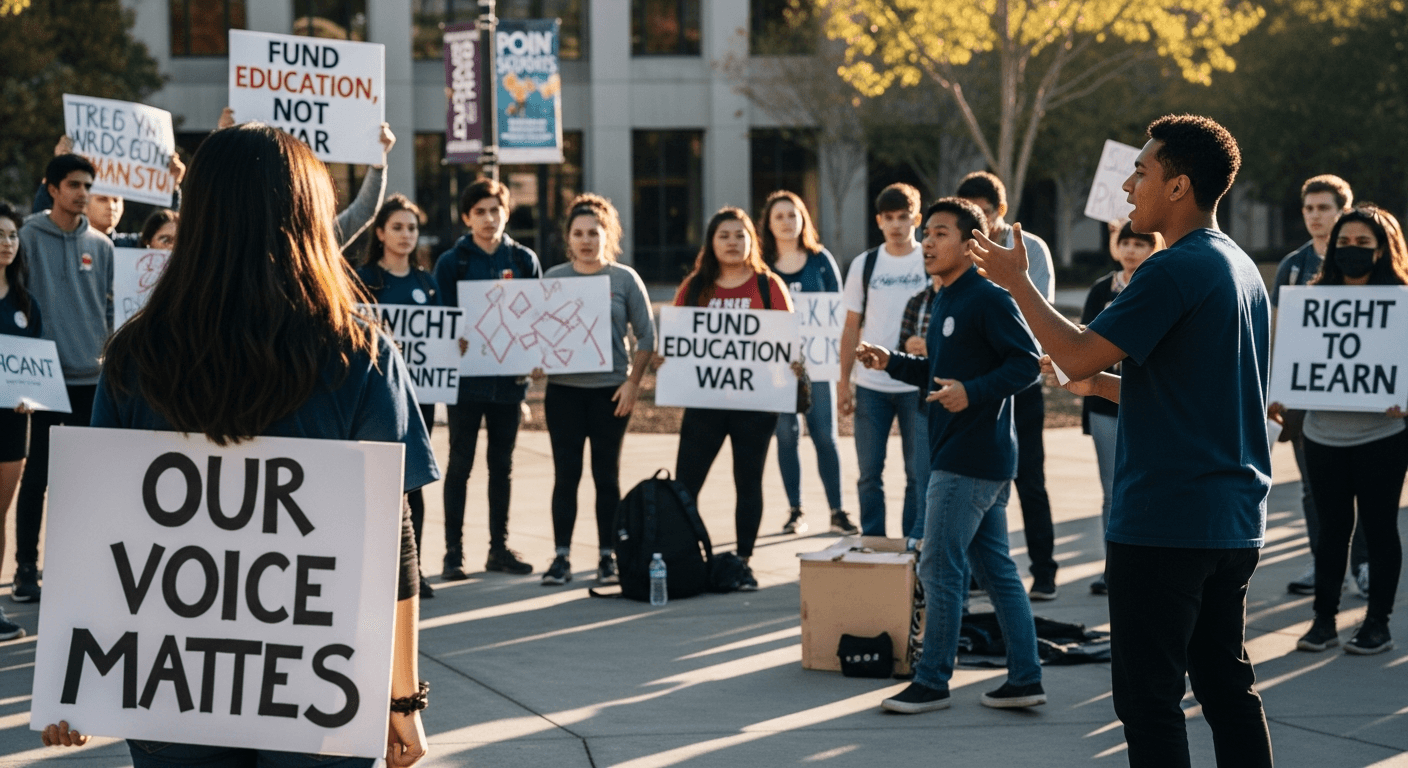
Disputes over student expression including political speech, protest activities, dress codes, off-campus social media posts, and student publications. Schools can restrict speech that causes substantial disruption but cannot suppress speech simply because it is unpopular or uncomfortable.
Disciplinary Due Process
Challenges to school disciplinary actions where students were not provided adequate notice of the charges against them, an opportunity to be heard, or fundamental fairness in the proceedings. Due process requirements vary by the severity of the penalty.
Search and Seizure
Challenges to searches of student lockers, backpacks, vehicles, and electronic devices by school officials. Under New Jersey v. T.L.O., school searches must be reasonable at their inception and in their scope.
FERPA Privacy Violations
Cases involving unauthorized disclosure of student educational records, including grades, disciplinary records, disability information, and other personally identifiable information protected under the Family Educational Rights and Privacy Act.
Anti-Discrimination Claims
Claims of discrimination based on race, sex, disability, religion, national origin, or sexual orientation in admissions, academic programs, extracurricular activities, and disciplinary proceedings.
Bullying and Harassment
Cases where schools fail to adequately respond to bullying or harassment that interferes with a students ability to access education, including cyberbullying that affects the school environment.
Religious Liberty in Schools
Disputes involving student prayer, religious expression, religious organizations on campus, accommodation of religious practices, and the boundary between permissible religious activity and impermissible government endorsement of religion.
Typical Student Rights Case Timeline
Incident and Initial Response
1-7 daysThe triggering event occurs, such as a disciplinary charge, speech restriction, or discrimination incident. Immediate documentation and evidence preservation are critical. Some schools impose very short deadlines for responding to charges.
Informal Resolution Attempt
1-4 weeksAttempting to resolve the matter through direct communication with school administrators, filing internal grievances, or requesting meetings with relevant decision-makers before formal proceedings.
Formal Administrative Proceedings
2-8 weeksIf informal resolution fails, the matter may proceed to a formal hearing, discipline panel, or administrative appeal process within the school or school district.
Agency Complaints
3-12 monthsFiling complaints with the Department of Education Office for Civil Rights, state education agencies, or other regulatory bodies that investigate violations of student rights.
Litigation
6 months to 3 yearsIf administrative remedies are exhausted or inadequate, filing a lawsuit in state or federal court seeking injunctive relief, damages, and declaratory judgment regarding the violation of student rights.
Know Your Rights
- Students have First Amendment rights to free expression at school, though schools may restrict speech that causes a substantial disruption to the educational environment or that is vulgar, school-sponsored, or promotes illegal drug use.
- Students facing suspension of 10 days or more are entitled to due process, including written notice of the charges, the evidence against them, and an opportunity to present their side of the story.
- Student educational records are protected under FERPA, and schools generally cannot release personally identifiable information without written parental consent or student consent if the student is 18 or older.
- Students have the right to be free from discrimination based on race, sex, national origin, disability, and religion under various federal civil rights statutes.
- Students have Fourth Amendment protections against unreasonable searches, though the standard for school searches is lower than the probable cause standard required for law enforcement.
- Students with disabilities have the right to reasonable accommodations and are protected from discrimination under Section 504 and the ADA.
- Students have the right to form religious and other student organizations on campus on the same terms as other student groups under the Equal Access Act.
What to Look for in a Student Rights Attorney
When your childs rights at school are at stake, look for an attorney who specializes in education law or civil rights with specific experience in the type of issue involved, whether it is disciplinary defense, free speech, disability discrimination, or privacy. For K-12 matters, the attorney should be familiar with your states education code and the specific school districts policies. For higher education matters, the attorney should understand institutional governance, student conduct codes, and the unique legal framework applicable to public versus private universities. Experience in administrative hearings is essential, as many student rights disputes are resolved outside of court. Look for an attorney who can work effectively with school administrators to resolve matters informally when possible but is prepared to litigate when necessary.
Questions to Ask Your Student Rights Attorney
- 1What specific school policy or law is the school relying on to justify its action, and does the policy comply with constitutional requirements?
- 2What is the formal process for appealing this decision, and what are the deadlines I need to meet?
- 3Has the school followed its own written policies and procedures in handling this matter?
- 4Is there evidence that similarly situated students have been treated differently, which might support a discrimination claim?
- 5Should we file a complaint with the Department of Education Office for Civil Rights or pursue the matter in court?
- 6What evidence should we gather and preserve now to protect our rights in case this matter escalates?
- 7What are the potential long-term consequences of this action for my childs academic record, college applications, or future opportunities?
Understanding Student Rights Legal Costs
Student rights attorneys may charge hourly rates of $200 to $500 per hour. Simple disciplinary defense matters may cost $2,000 to $10,000 for representation through a hearing. More complex cases involving discrimination claims, federal court litigation, or systemic challenges can cost $20,000 to $100,000 or more. Under federal civil rights statutes such as Section 1983 and Title IX, prevailing plaintiffs may recover attorneys fees from the school or district. Some civil rights organizations and legal aid societies provide free or reduced-cost representation for student rights cases, particularly those involving discrimination or constitutional violations. Many education attorneys offer free initial consultations to assess the merits and urgency of the situation.
Key Legal Terms
Video Resources
These videos are provided for informational purposes only. The attorneys and organizations featured are not affiliated with or endorsed by Northwind Law.
Tinker v. Des Moines: Student Free Speech Rights
Khan Academy
Student Privacy: FERPA Explained
EducationWeek
Know Your Rights: Students and the First Amendment
ACLU
Frequently Asked Questions About Student Rights
Citations & Sources
- [1]In Tinker v. Des Moines (1969), the Supreme Court held that students do not shed their constitutional rights at the schoolhouse gate, establishing that student expression is protected unless it materially and substantially disrupts school operations. — Tinker v. Des Moines Independent Community School District, 393 U.S. 503 (1969)
- [2]Approximately 2.5 million students received one or more out-of-school suspensions during the 2019-20 school year, with significant racial disparities in suspension rates. — U.S. DOE Civil Rights Data Collection, 2019-20
- [3]In New Jersey v. T.L.O. (1985), the Supreme Court held that school officials may search students when they have reasonable grounds to believe the search will reveal evidence of a violation of law or school rules. — New Jersey v. T.L.O., 469 U.S. 325 (1985)
- [4]Under FERPA, schools must have written permission from a parent or eligible student before releasing any information from a students educational record, with limited exceptions for legitimate educational interests. — 20 U.S.C. § 1232g
Ready to Discuss Your Student Rights Case?
Speak with a experienced student rights attorney. Free consultations available.