
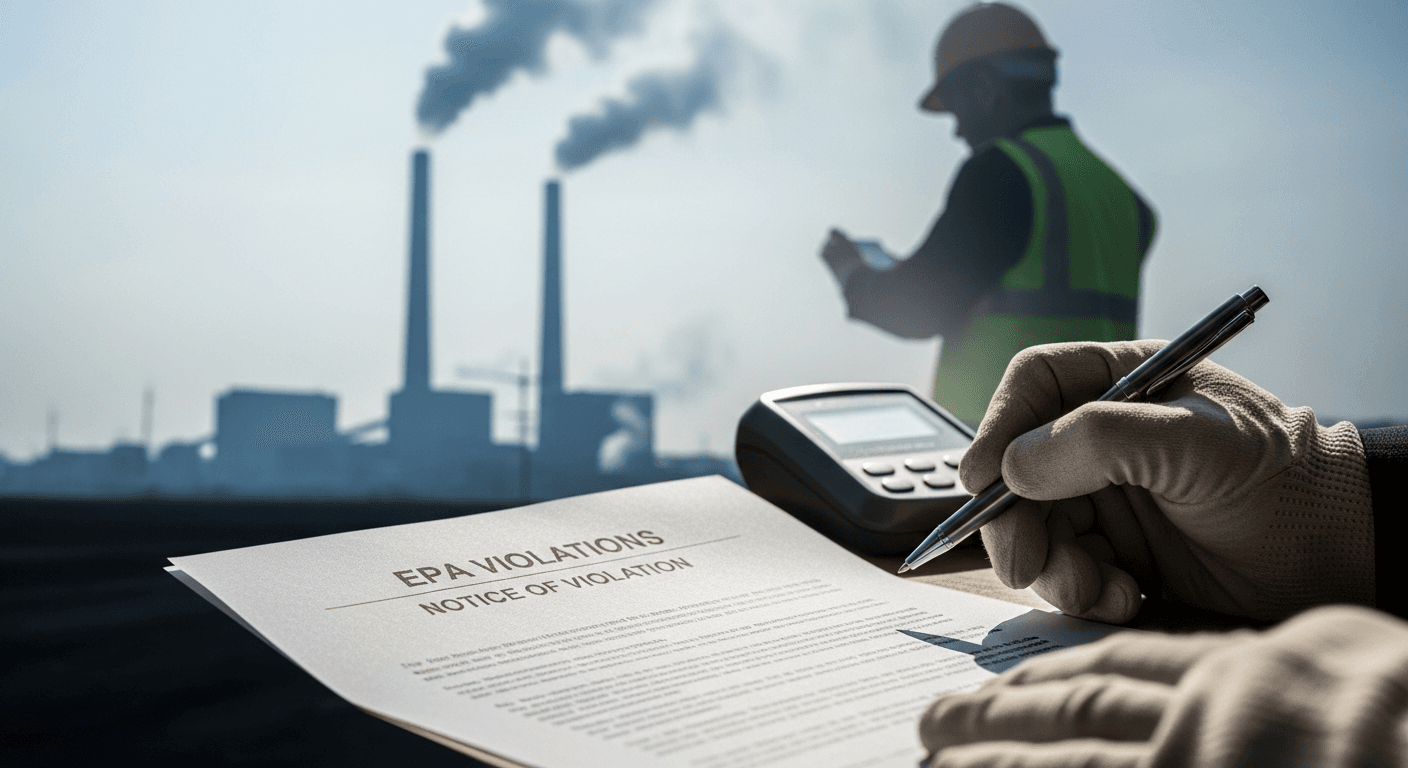
EPA Violations Attorneys
Experienced legal representation for epa violations matters across all 50 states.
About EPA Violations
EPA violations encompass any failure to comply with the environmental laws, regulations, permits, and orders enforced by the U.S. Environmental Protection Agency. The EPA administers and enforces a comprehensive suite of federal environmental statutes including the Clean Air Act, Clean Water Act, Safe Drinking Water Act, Resource Conservation and Recovery Act, Toxic Substances Control Act, Federal Insecticide, Fungicide, and Rodenticide Act (FIFRA), and the Emergency Planning and Community Right-to-Know Act, among others. Violations can range from minor record-keeping failures and late reporting to catastrophic releases of hazardous substances and deliberate concealment of environmental contamination.
The EPA employs a multi-layered enforcement approach that begins with compliance monitoring through inspections, monitoring data review, and self-reporting verification. When violations are identified, the agency can pursue administrative enforcement through compliance orders and administrative penalties, civil judicial enforcement through Department of Justice lawsuits seeking injunctive relief and civil penalties, or criminal enforcement for knowing or willful violations. The choice of enforcement mechanism depends on the severity of the violation, the violators compliance history, the environmental and health impacts, and whether there was an element of culpable conduct.
Administrative penalties can reach up to $60,000 or more per day per violation depending on the statute. Civil judicial penalties can be substantially higher, particularly when violations are ongoing or involve multiple facilities. Criminal violations can result in individual imprisonment and fines reaching $1 million or more per day for organizations. The EPA also uses Supplemental Environmental Projects (SEPs) in settlement agreements, allowing violators to invest in environmental improvement projects as partial offsets to monetary penalties.
Why You Need an EPA Violations Attorney
EPA enforcement is the primary mechanism for ensuring that environmental protections enacted by Congress are actually followed. Without effective enforcement, the Clean Air Act, Clean Water Act, and other landmark environmental statutes would be merely aspirational goals. EPA violations endanger public health by allowing pollutants into the air people breathe, the water they drink, and the soil in which food is grown. For regulated entities, EPA violations carry consequences that extend far beyond monetary penalties. Criminal prosecution can result in imprisonment of corporate officers and employees. Debarment from government contracts can eliminate major revenue sources. Mandatory injunctive relief may require fundamental changes to operations. The stigma of environmental violation can damage brand value, customer relationships, and community standing. Early detection and correction of compliance issues is far less costly than responding to enforcement actions after violations are discovered by regulators.
Common EPA Violations Cases
Clean Air Act Violations
Exceeding permitted emission limits, operating without required permits, failing to install or maintain pollution control equipment, and violations of National Emission Standards for Hazardous Air Pollutants (NESHAPs).
Clean Water Act Violations
Discharging pollutants without an NPDES permit, exceeding permitted discharge limits, failing to comply with stormwater management requirements, and unauthorized filling of wetlands.
Hazardous Waste Violations
Improper storage, treatment, or disposal of hazardous waste; failure to properly characterize waste; operating without required RCRA permits; and failure to comply with land disposal restrictions.
Reporting and Record-Keeping Violations
Failure to submit required reports, maintain required records, file Toxic Release Inventory reports, or provide required notifications of spills and releases to federal, state, and local agencies.
Toxic Substances Violations
Violations of the Toxic Substances Control Act including manufacture or import of chemicals without required EPA review, failure to comply with asbestos and lead-based paint regulations, and violations of PCB management requirements.
Criminal Environmental Violations
Knowing violations of environmental statutes, negligent endangerment of human life, knowing endangerment, falsification of monitoring data or reports, and conspiracy to violate environmental laws.
Typical EPA Violations Case Timeline
Inspection or Compliance Evaluation
1-5 days on-siteEPA or state inspectors conduct on-site inspections, review records and monitoring data, collect samples, and interview personnel. Written findings are typically provided weeks to months later.
Notice of Violation or Information Request
30-90 days to respondEPA issues a notice of violation or request for information. A thorough, accurate, and timely response is critical and should be prepared with legal counsel.
Administrative or Civil Enforcement Action
3-12 months from NOVEPA issues an administrative complaint or refers the matter to the DOJ for civil judicial action. Proposed penalties and required corrective actions are specified.
Settlement Negotiations
6-24 monthsNegotiations with EPA or DOJ regarding penalty amounts, compliance schedules, supplemental environmental projects, and the terms of consent orders or consent decrees.
Administrative Hearing or Trial
6-18 months if contestedIf settlement is not reached, an administrative hearing before an EPA administrative law judge or a civil trial in federal court. Criminal cases proceed through the federal criminal process.
Know Your Rights
- You have the right to legal representation at every stage of an EPA enforcement proceeding, from the initial inspection through administrative hearings, civil litigation, or criminal proceedings.
- You have the right to review and respond to the evidence and allegations underlying an enforcement action before penalties are assessed.
- In administrative enforcement proceedings, you have the right to a hearing before an EPA administrative law judge with the opportunity to present evidence and cross-examine witnesses.
- You have the right to appeal administrative penalty decisions to the EPA Environmental Appeals Board and ultimately to federal court.
- In criminal proceedings, you have all constitutional protections including the right to remain silent, the right to counsel, the right to a jury trial, and the presumption of innocence.
- You have the right to challenge the technical basis of alleged violations, including sampling methodologies, monitoring data, and regulatory interpretations.
What to Look for in an EPA Violations Attorney
When facing an EPA enforcement action, look for an attorney with specific experience in federal environmental enforcement defense. The attorney should have experience with the specific environmental statute at issue, whether it is the Clean Air Act, Clean Water Act, RCRA, or another law. Experience negotiating with EPA regional offices and the Department of Justice Environmental Crimes Section is critical. For criminal matters, you need an attorney with environmental criminal defense experience, as these cases require understanding of both criminal procedure and complex environmental regulations. The attorney should have access to technical experts in environmental engineering, industrial hygiene, and related fields. Ask about their track record in reducing proposed penalties, negotiating favorable settlement terms, and, when necessary, prevailing at administrative hearings or trial.
Questions to Ask Your EPA Violations Attorney
- 1What specific violations are alleged, and what is the maximum penalty exposure under the applicable statute?
- 2Is this an administrative, civil, or criminal enforcement matter, and what determines the track it follows?
- 3What are the strongest defenses available, including challenges to the technical basis of the alleged violations?
- 4Should we pursue settlement or prepare for a hearing or trial, and what are the likely outcomes of each approach?
- 5Are there Supplemental Environmental Project options that could reduce the monetary penalty?
- 6What corrective actions will be required regardless of the penalty outcome, and what will they cost to implement?
- 7Is there a risk that this civil enforcement action could be referred for criminal investigation?
Understanding EPA Violations Legal Costs
EPA violation defense typically involves hourly rates of $350 to $750 per hour for experienced environmental attorneys. Simple administrative penalty matters may cost $15,000 to $50,000 in legal fees. Complex multi-statute enforcement actions can cost $100,000 to over $1 million. Criminal environmental defense is typically the most expensive, with costs ranging from $200,000 to several million dollars for cases that go to trial. Technical consultants and expert witnesses add significant costs, often $50,000 to $200,000 or more for complex matters. These costs should be evaluated against the potential penalties, which can reach millions of dollars, the cost of mandatory corrective actions, and the potential for criminal sanctions including imprisonment.
Key Legal Terms
Video Resources
These videos are provided for informational purposes only. The attorneys and organizations featured are not affiliated with or endorsed by Northwind Law.
How the EPA Works: Environmental Protection
CGP Grey
How the EPA Enforces Environmental Law
PBS Terra
Environmental Crime: The Hidden Costs of Pollution
DW Documentary
Frequently Asked Questions About EPA Violations
Citations & Sources
- [1]In fiscal year 2023, EPA criminal enforcement resulted in 111 defendants charged and 73 years of incarceration imposed, demonstrating the serious personal consequences of environmental crime. — EPA Enforcement Annual Results, FY 2023
- [2]EPA penalty policies calculate civil penalties based on the economic benefit the violator gained from noncompliance plus a gravity component reflecting the seriousness of the violation. — EPA Penalty Policy Guidance
- [3]Criminal penalties under the Clean Air Act can include fines of up to $1 million per day for organizations and imprisonment of up to 15 years for knowing endangerment. — 42 U.S.C. § 7413(c)
- [4]EPAs ECHO database tracks compliance and enforcement information for approximately 450,000 facilities regulated under federal environmental laws, providing public access to inspection and violation records. — EPA ECHO Database
- [5]The EPA conducted approximately 9,800 compliance evaluations and inspections in fiscal year 2023, identifying violations across all major environmental programs. — EPA Enforcement Annual Results, FY 2023
Ready to Discuss Your EPA Violations Case?
Speak with an experienced epa violations attorney. Free consultations available.