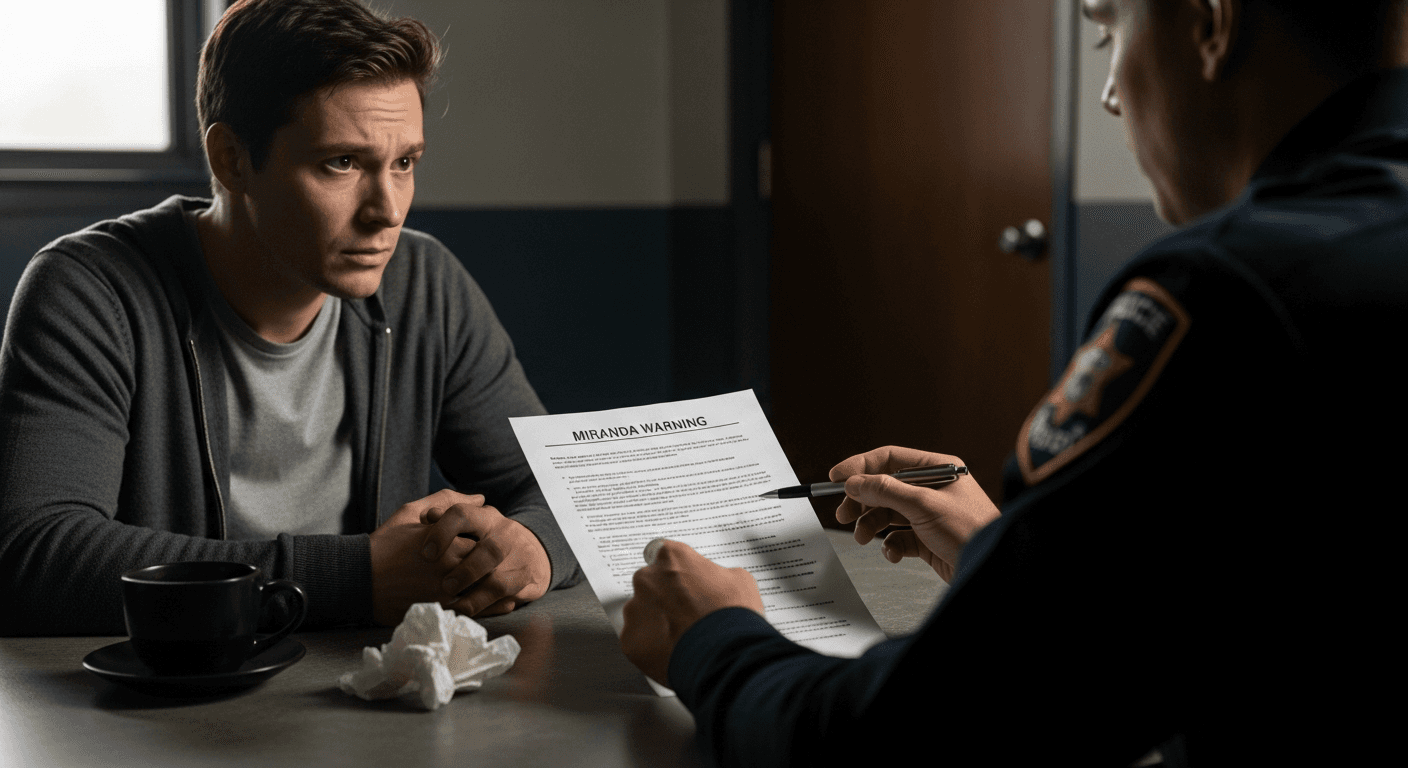
The Origin and Purpose of Miranda Rights
Miranda rights trace their origin to the landmark 1966 United States Supreme Court case Miranda v. Arizona. In that case, Ernesto Miranda was arrested and interrogated by police without being informed of his constitutional rights. He ultimately confessed to the crime, but the Supreme Court ruled that his confession was inadmissible because he had not been advised of his right to remain silent and his right to an attorney before the interrogation. This decision fundamentally changed the way law enforcement conducts custodial interrogations throughout the United States.
The purpose of Miranda rights is to protect individuals from self-incrimination, a right guaranteed by the Fifth Amendment to the U.S. Constitution. The Framers of the Constitution recognized that the power imbalance between the government and an individual accused of a crime could lead to coerced confessions and unjust convictions. Miranda rights serve as a safeguard against this imbalance by ensuring that individuals are aware of their rights before they are subjected to the inherently coercive environment of a custodial interrogation.
The Miranda warning typically consists of four key components: the right to remain silent, the warning that anything you say can and will be used against you in a court of law, the right to have an attorney present during questioning, and the right to have an attorney appointed for you if you cannot afford one. While the exact wording of the Miranda warning may vary from jurisdiction to jurisdiction, these core elements must be conveyed in a manner that is clear and understandable to the person being detained.
It is important to understand that Miranda rights do not prevent police from arresting you or from asking you questions. Rather, they establish a framework that protects the admissibility of your statements in court. If law enforcement fails to provide a proper Miranda warning when one is required, any statements you make during the subsequent interrogation may be suppressed, meaning they cannot be used as evidence against you at trial. This exclusionary remedy is the primary enforcement mechanism for Miranda rights.
When Miranda Rights Must Be Read
One of the most common misconceptions about Miranda rights is that police must read them to you immediately upon arrest. In reality, Miranda warnings are only required when two conditions are met simultaneously: you are in custody, and you are being subjected to interrogation. Both elements must be present for the Miranda requirement to apply. If either element is missing, law enforcement is generally not required to advise you of your rights, and any statements you make voluntarily may still be admissible in court.
Custody, for Miranda purposes, generally means that a reasonable person in your situation would not feel free to leave. This typically includes formal arrest but can also extend to situations where you are effectively detained, even if the police have not formally placed you under arrest. Courts look at the totality of the circumstances to determine whether a person was in custody, considering factors such as the location of the encounter, the number of officers present, whether physical restraints were used, the duration of the detention, and the officer's tone and demeanor.
Interrogation refers to direct questioning or its functional equivalent. Direct questioning is straightforward, such as asking a suspect about their involvement in a crime. The functional equivalent of interrogation includes any words or actions by law enforcement that are reasonably likely to elicit an incriminating response. For example, if an officer makes a statement designed to provoke a suspect into responding, that could be considered the functional equivalent of interrogation even though no question was asked.
There are several common scenarios where Miranda warnings are not required. Routine traffic stops generally do not constitute custody for Miranda purposes, even though you are not free to leave, because they are considered temporary and relatively nonthreatening. Voluntary conversations with police, where you are free to leave at any time, also do not trigger Miranda requirements. Similarly, spontaneous statements made without prompting by law enforcement are admissible regardless of whether Miranda warnings have been given. Understanding these distinctions is crucial for knowing when your Miranda rights apply and when they do not.
How to Properly Exercise Your Miranda Rights
Knowing your Miranda rights is only half the equation; knowing how to exercise them effectively is equally important. If you are taken into custody and subjected to questioning, you should clearly and unambiguously invoke your rights. The Supreme Court has held that you must affirmatively assert your right to remain silent in a clear manner. Simply remaining quiet may not be sufficient, as courts have sometimes ruled that silence alone does not constitute an invocation of the right to remain silent.
To invoke your right to remain silent, use clear and direct language such as "I am exercising my right to remain silent" or "I do not wish to answer any questions." Once you have clearly invoked this right, law enforcement is required to stop questioning you. However, if you later voluntarily reinitiate communication with the police, your statements may be admissible even without a fresh Miranda warning, provided that your decision to speak was truly voluntary and not the result of coercion.
Similarly, if you wish to have an attorney present during questioning, you should state this clearly by saying something like "I want to speak with a lawyer before answering any questions" or "I am requesting an attorney." Once you have invoked your right to counsel, police must cease all interrogation until an attorney has been provided to you or until you voluntarily reinitiate contact with law enforcement. The request for counsel must be unambiguous; vague statements such as "Maybe I should talk to a lawyer" may not be sufficient to trigger the protections afforded by Miranda.
It is also important to remain calm and respectful when exercising your rights. While it can be frightening and stressful to be placed in custody, becoming confrontational or hostile can escalate the situation and may negatively affect your case. You are not required to explain your reasons for invoking your rights, and doing so is not an admission of guilt. Exercising your constitutional rights is a fundamental protection available to every person, regardless of whether they are guilty or innocent, and doing so cannot legally be held against you in court.
What Happens When Miranda Rights Are Violated
When law enforcement fails to provide a Miranda warning in a situation where one is required, the primary consequence is that statements obtained during the improper interrogation may be excluded from evidence at trial. This is known as the exclusionary rule, and it serves as a deterrent against law enforcement violations of constitutional rights. If a judge determines that a Miranda violation occurred, the prosecution will not be able to use the improperly obtained statements to prove its case.
However, the exclusionary rule has several important limitations and exceptions that are worth understanding. One significant exception is the impeachment exception, which allows improperly obtained statements to be used to challenge a defendant's credibility if they choose to testify at trial. For example, if you made a statement without Miranda warnings and then testify to something contradictory at trial, the prosecution may be able to introduce your earlier unwarned statement to impeach your testimony, even though the statement could not be used as direct evidence of guilt.
Another important concept is the fruit of the poisonous tree doctrine, which generally provides that evidence derived from a Miranda violation is also subject to suppression. However, the Supreme Court has limited the application of this doctrine in the Miranda context. In the 2004 case United States v. Patane, the Court held that physical evidence discovered as a result of an unwarned statement is not necessarily subject to suppression. This means that if you tell police where to find a weapon without receiving Miranda warnings, the weapon itself may still be admissible in court even though your statement is not.
It is also critical to understand that a Miranda violation does not automatically result in the dismissal of your case. The exclusion of improperly obtained statements may weaken the prosecution's case significantly, but if there is sufficient other evidence to support the charges, the case can still proceed. The practical impact of a Miranda violation depends on how central the suppressed statements are to the prosecution's case. In some instances, suppressed statements may be the cornerstone of the case, and their exclusion may effectively end the prosecution. In other cases, the remaining evidence may be strong enough to proceed without them.
Miranda Rights in Special Circumstances
Miranda rights apply somewhat differently in certain special circumstances that are worth understanding. For juvenile suspects, many states have enacted additional protections beyond those required by Miranda. Some jurisdictions require that a parent, guardian, or other trusted adult be present during any custodial interrogation of a minor. Courts also consider the age of the suspect when determining whether a person was in custody for Miranda purposes, recognizing that a young person may feel less free to leave a police encounter than an adult in the same situation.
In the context of immigration enforcement, individuals detained by immigration authorities are generally entitled to Miranda warnings if they are subjected to custodial interrogation about criminal activity. However, routine immigration processing questions, such as those asked during booking at a detention facility, typically do not require Miranda warnings. It is important to note that non-citizens have the same Miranda protections as citizens when it comes to criminal investigations, regardless of their immigration status.
The public safety exception is another important special circumstance. Established by the Supreme Court in New York v. Quarles in 1984, this exception allows law enforcement to ask questions reasonably prompted by a concern for public safety without first providing Miranda warnings. For example, if police arrest a suspect and have reason to believe there is an abandoned weapon nearby that could endanger the public, they may ask about the weapon's location without first providing Miranda warnings. Statements obtained under this exception are generally admissible in court.
Miranda rights also intersect with digital communications and modern technology in ways that continue to evolve. Questions about whether social media posts, text messages, or other digital communications constitute custodial statements or voluntary admissions are increasingly common in criminal cases. Courts are still working through many of these issues, and the law in this area is developing rapidly. As technology advances, the application of Miranda principles to new forms of communication will likely continue to be refined through case law and legislation.
Common Myths About Miranda Rights
There are numerous myths and misconceptions about Miranda rights that can lead individuals to make poor decisions during encounters with law enforcement. One of the most pervasive myths is that if police fail to read your Miranda rights, your case will automatically be dismissed. As discussed earlier, this is not true. A Miranda violation affects the admissibility of statements obtained during improper interrogation, but it does not invalidate an arrest or require dismissal of the charges if other evidence supports the prosecution's case.
Another common myth is that undercover police officers must identify themselves as law enforcement if asked directly. There is no legal requirement for undercover officers to reveal their identity, and statements made to undercover officers are generally admissible without Miranda warnings because the individual is not in custody and the interaction does not carry the same coercive elements as a formal interrogation. Courts have consistently upheld the use of undercover operations and the admissibility of statements obtained through such operations.
Many people also believe that they must answer police questions during a traffic stop or other encounter with law enforcement. While you are generally required to provide identifying information such as your name and, in some states, your identification when asked, you are not required to answer substantive questions about your activities or potential criminal conduct. You can politely decline to answer questions beyond providing basic identification, and your refusal to answer cannot be used as evidence of guilt. However, this right must be balanced with the practical reality that being uncooperative may affect how law enforcement interacts with you.
Finally, some people mistakenly believe that Miranda rights only protect guilty people. In reality, Miranda protections are essential safeguards for everyone, including innocent individuals. False confessions are a well-documented phenomenon, and research has shown that innocent people are sometimes particularly vulnerable to the pressure of custodial interrogation. The stress, fatigue, and intimidation of an interrogation environment can lead even innocent individuals to make statements that are incomplete, misleading, or outright false. Miranda rights protect against these risks by ensuring that everyone understands their right to remain silent and to have legal representation during questioning.
Practical Tips for Encounters with Law Enforcement
Understanding your Miranda rights in theory is important, but knowing how to apply that knowledge during real-world encounters with law enforcement is essential. The first and most important tip is to remain calm during any interaction with police. Emotional reactions, whether driven by fear, anger, or anxiety, can lead to poor decision-making and may escalate a situation unnecessarily. Take a deep breath, speak in a measured tone, and remember that you have rights that protect you in this situation.
If you are approached by police, it is helpful to determine the nature of the encounter early on. You can ask the officer whether you are free to leave. If the answer is yes, you are not in custody, and you may choose to walk away. If the answer is no, or if the circumstances make it clear that you are not free to leave, you are likely in custody, and any interrogation that follows should be preceded by Miranda warnings. Regardless of whether you are in custody, you always have the right not to answer questions that could incriminate you.
Keep your hands visible during any encounter with law enforcement and follow basic instructions such as producing your license and registration during a traffic stop. You can comply with these requests while still exercising your right not to answer questions. A simple statement such as "I would like to cooperate, but I prefer not to answer questions without my attorney present" communicates both respect and a firm assertion of your rights. Avoid making any statements about the events in question, as even seemingly innocent remarks can be taken out of context or used against you later.
After any encounter with law enforcement, especially one that results in an arrest, document everything you remember as soon as possible. Write down the time and location of the encounter, the officers' names and badge numbers if available, what was said by both you and the officers, whether Miranda warnings were given, and the names of any witnesses. This information can be invaluable to your attorney when evaluating your case and determining whether your rights were properly respected. Remember that an attorney is your strongest ally in navigating the criminal justice system, and consulting one early in the process is always advisable.
Key Takeaways
- Miranda warnings are only required when you are both in custody and being subjected to interrogation — not upon every arrest or police encounter.
- You must clearly and unambiguously invoke your right to remain silent or your right to an attorney for those protections to take effect.
- A Miranda violation does not automatically result in case dismissal — it affects the admissibility of statements obtained during improper questioning.
- The public safety exception allows officers to ask certain urgent questions without Miranda warnings under specific circumstances.
- Miranda protections apply equally to citizens and non-citizens, and juveniles often receive additional protections under state law.
- Remaining calm, clearly asserting your rights, and documenting encounters with law enforcement are the most effective ways to protect yourself.
Frequently Asked Questions
Do police have to read me my rights immediately when I am arrested?
Not necessarily. Miranda warnings are required before custodial interrogation, not at the moment of arrest. If police arrest you but do not question you, they are not required to read you your rights. However, any custodial questioning that occurs without proper Miranda warnings may result in your statements being excluded from evidence at trial.
Can my silence be used against me in court?
Generally, invoking your right to remain silent after receiving Miranda warnings cannot be used against you at trial. However, pre-arrest silence in some circumstances may be treated differently by courts. The safest approach is to clearly and explicitly invoke your right to remain silent so there is no ambiguity about your intentions.
What should I do if police continue questioning me after I invoke my rights?
If you have clearly invoked your right to remain silent or requested an attorney and police continue to question you, do not answer their questions. Remain calm and repeat your invocation if necessary. Any statements obtained after a clear invocation of your rights are generally inadmissible. Report the incident to your attorney as soon as possible.
Do Miranda rights apply during a traffic stop?
Routine traffic stops are generally not considered custodial situations for Miranda purposes, so officers typically are not required to read you your rights. However, if a traffic stop escalates to the point where a reasonable person would not feel free to leave and questioning begins, Miranda protections may apply. You always retain the right not to answer incriminating questions.
This guide is provided for general informational purposes only and does not constitute legal advice. Laws vary by state and jurisdiction, and the information here may not apply to your specific situation. For advice tailored to your circumstances, consult with a qualified attorney.